


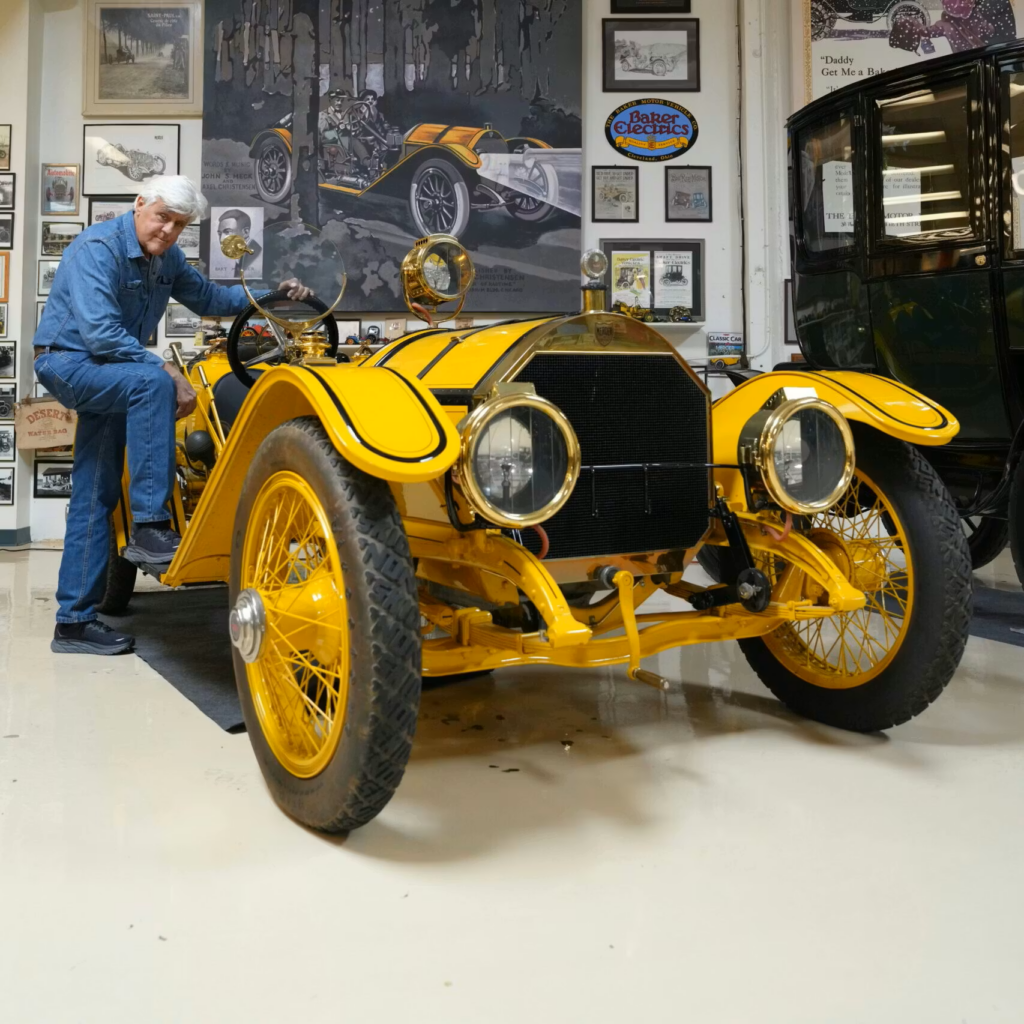
I called my editor and asked him what do you want me to write about this month? He said how about while prices for more modern classics are going down, Brass Era cars are going through the roof! Why do you think that is? One reason might be accessibility. Although it’s hard for me to believe my 2004 Porsche Carrera GT, which I bought new, is now a modern classic that’s almost a quarter of a century old; I hear younger guys talking about it like it’s a Conestoga wagon. No lane departure warning, no backup camera, no traction control etc. I realize now I lived through the golden age of motoring without even noticing it!
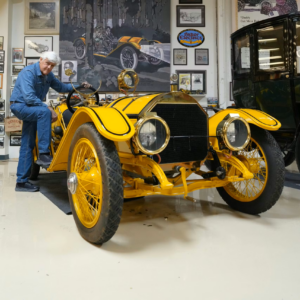
I came of my motoring age in the mid-60s – Cobras, Corvettes, GTOs – I used to feel sorry for enthusiasts that were older than me because the cars they grew up with were so boring. Then I started to wonder what came before muscle cars. And I began to read about cars that came and went long before I was born, Mercer raceabouts, Duesenbergs which in 1928 had twin cams with a four valve hemi head as well as a supercharger and was capable of 130 miles an hour.
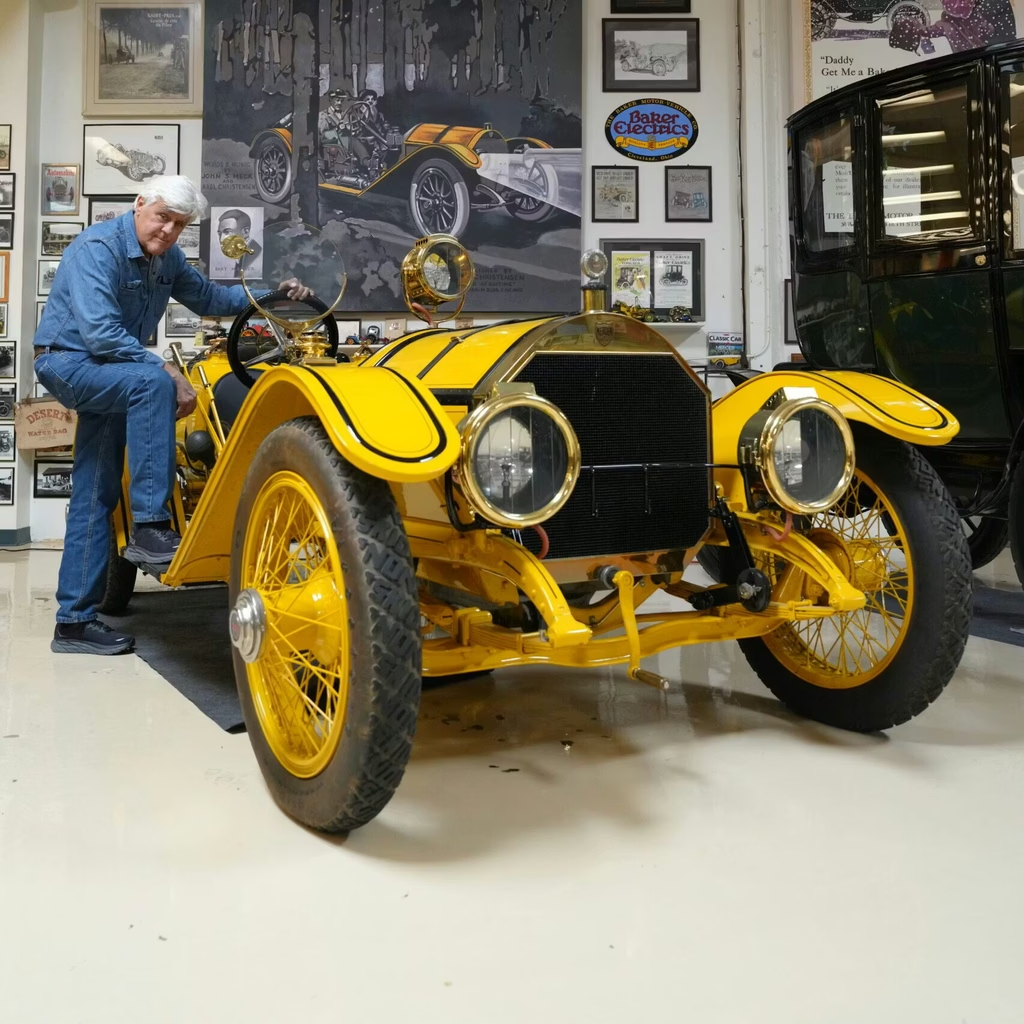
The Brass Era was the absolute beginning. Prior to the Brass Era, it was all about just going down the road. Remember since the beginning of time armies moved at about 4.8 mph, which was a brisk walk, and that was about as quick as an army could move across Europe, and it would take months to do it.
Automotive technology was moving at lightning speed, and the Brass Era was the starting gun and going fast was the name of the game – handling, braking, and safety be damned, these were mere afterthoughts that would come later – huge motors with piston bores the size of paint cans sounded like cannons firing in rapid succession, they would frighten women and scattered children.
Remember almost no one had traveled much faster than a horse could trot, so they would stand in the middle of the road as these monsters traveling at 60mph or 5.280 feet per minute just mowed them down. This is where the phrase, “there is no substitute for cubic inches,” came from.
I remember an article in an OLD magazine about how the Mercer Raceabout was so modern and sophisticated that it would be hard to imagine any future cars being better than this. Prior to the Mercer Raceabout, when you went racing, you put the biggest engine possible in the lightest car; the Mercer was one of the first cars of its kind to have a light chassis and a small engine sitting as low in the frame as possible. This way, if Mercer couldn’t get them the on the straightaways they could catch them in the corners. This is what allowed a completely stock Mercer Raceabout to come in second at the very first Indianapolis 500. It was the same kind of innovative thinking that allowed Jimmy Clark to win Indianapolis with the Lotus 38 – a smaller lighter rear engine car.
So, what does this have to do with the price of brass cars. At the beginning of this article, I talked about accessibility, and by that, I mean the ability to get your car going again once it stops. Let’s face it: with modern supercars, even ones as old as my Carrera GT, when they stop, your tool kit consists pretty much of a cellphone! There’s not much else you can do.
Old cars have a pretty simple routine: you need gas and a spark, and if you can get these two things together, you’re on your way. When you swing the starting handle on one of these monsters and they burst into life, onlookers give you a round of applause! You have tamed a savage beast! When has that ever happened when you just turned a key? With a brass car you have something to polish – namely brass! Seeing a brass radiator shimmering in the sunlight is way more satisfying than wiping down your matt-black clear plastic wrap with a bottle of detail spray. With a brass era car, you get to enjoy 40 mph… and let’s face it, with more modern exotics the tach moves across the face of the dial so quickly you don’t even realize you’ve been arrested.
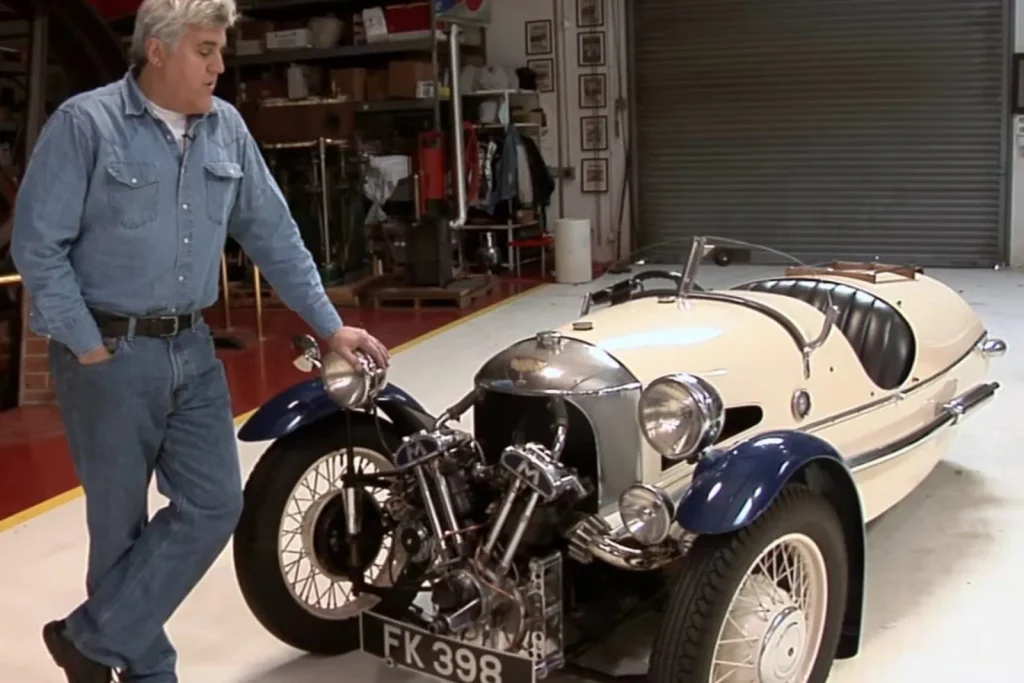
I had something like this happen to me in my early 1930s Morgan 3-wheeler powered by a “big” 990 cc Matchless water-cooled V twin: I was flying along LA’s famous Mulholland Drive when I rounded a corner and opened up the throttle for the upcoming straight. Just then I saw a motorcycle cop with a radar gun pointing right at me, I was going too fast to slow down, so I just roared past him. As I got by him, I noticed in my rear-view mirror he was watching me and I thought this is not a good idea – I’ll just pull over and wait for him to approach me. He never came. That seemed odd, so I turned around to go back to where he was, ready to face the music. As I pulled up, I said to him, “I saw your radar gun, how fast was I going?” “Oh, you’re ok,” he said, “speed limit here is 40 and you were going 37.” “Oh my God! I thought I was doing 70!” “No, sorry to disappoint you” he said, “but you were only going 37!”
Oh, and yes, the Morgan did have a brass radiator.
About The Author

More Stories
Five Miles an Hour to Trouble
The Magarigawa Club
Smaller Car Events are Getting Bigger