


Photos courtesy: Pebble Beach Concours, Ron Kimbal Studio, Sherman Chu, Ken Gross
IN THE 1930’S, as the world drifted inexorably toward a second major conflict, automobile designers and engineers worldwide produced some of the most advanced and cherished designs of all time. Barely three decades into the 20th century, the nascent automobile had already found its basic form, and it was beginning to reach for the sky. Aerodynamics was in its infancy, although the aircraft industry was beginning to have a distinct influence on trains and automobiles.
Celebrated engineers like Hans Ledwinka in Czechoslovakia, Paul Jaray in Hungary, Gabriel Voisin in France, and Ferdinand Porsche in Germany, all had a keen understanding that angular architecture was passé, and streamlining was the next major design direction. French carrossiers (coachbuilders) like Joseph Figoni, Jacques Pourtout and Georges Paulin understood that sinuous shapes could be both aerodynamic and stunningly beautiful. French aircraft designer Jean Andreau began applying his skills to automobiles. These talented men either knew their contemporaries personally or knew of one another’s work. Referring to Hans Ledwinka, Ferdinand Porsche said, “Sometimes I looked over his shoulder and sometimes he looked over mine.”
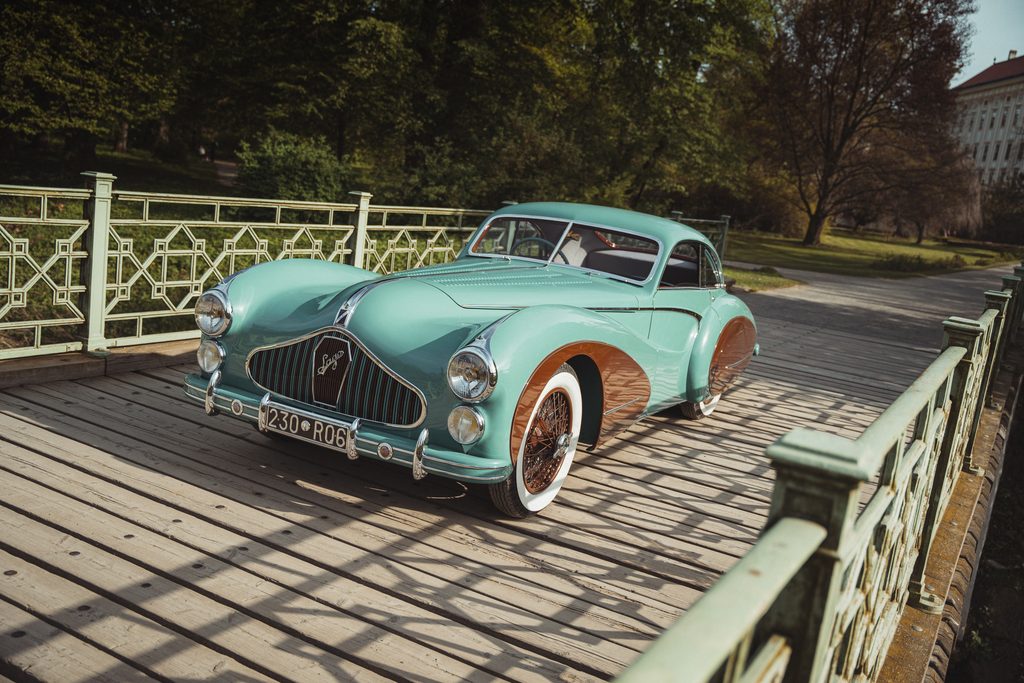
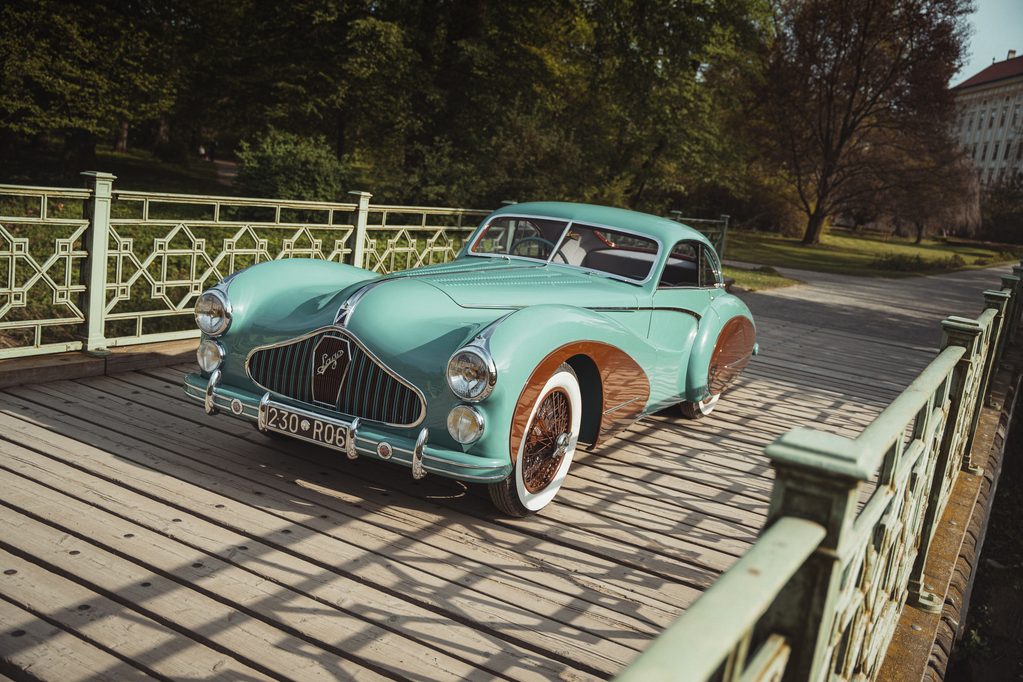
Hans Ledwinka’s masterpiece was the Tatra T77, a highly advanced sedan – a revelation in 1934 – with a sleek, aircraft-inspired shape, a dorsal fin, a clever backbone chassis and a rear-mounted, air-cooled, magnesium block V-8. In Paris, Antony Lago’s coachbuilt Talbot cars, first the race-bred model T150-C, followed by the T26, had were offered with powerful, race-bred engines, and his Talbot-Lago cars benefitted from dramatic coachwork that dazzled auto showgoers and pointed the way for lesser marques to follow.
In today’s contemporary Czech Republic, two collectors have focused on these rare marques, and they have attained worldwide recognition with their collections. Pavel Kasik from Prague is a renowned Tatra expert, and he owns examples of nearly every significant Tatra car. Robert Kudela, who lives near Koprĩvnice in the Eastern region, especially fancies the Talbot-Lago T26, and has three stunning examples bodied by Figoni, Saoutchik, and Antem.
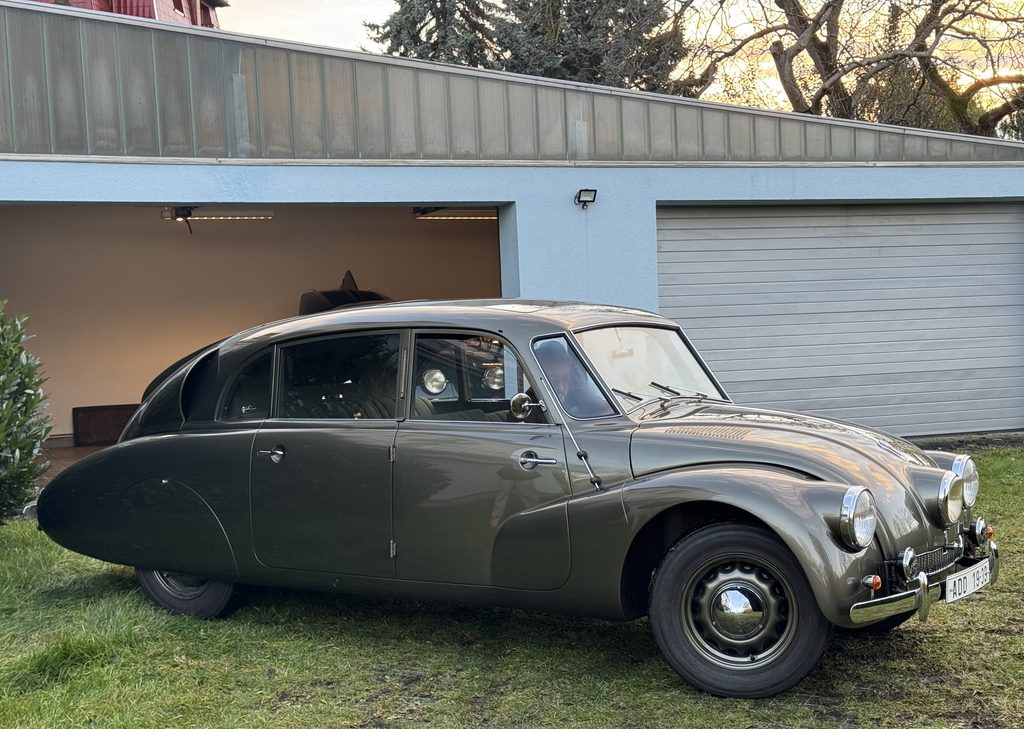
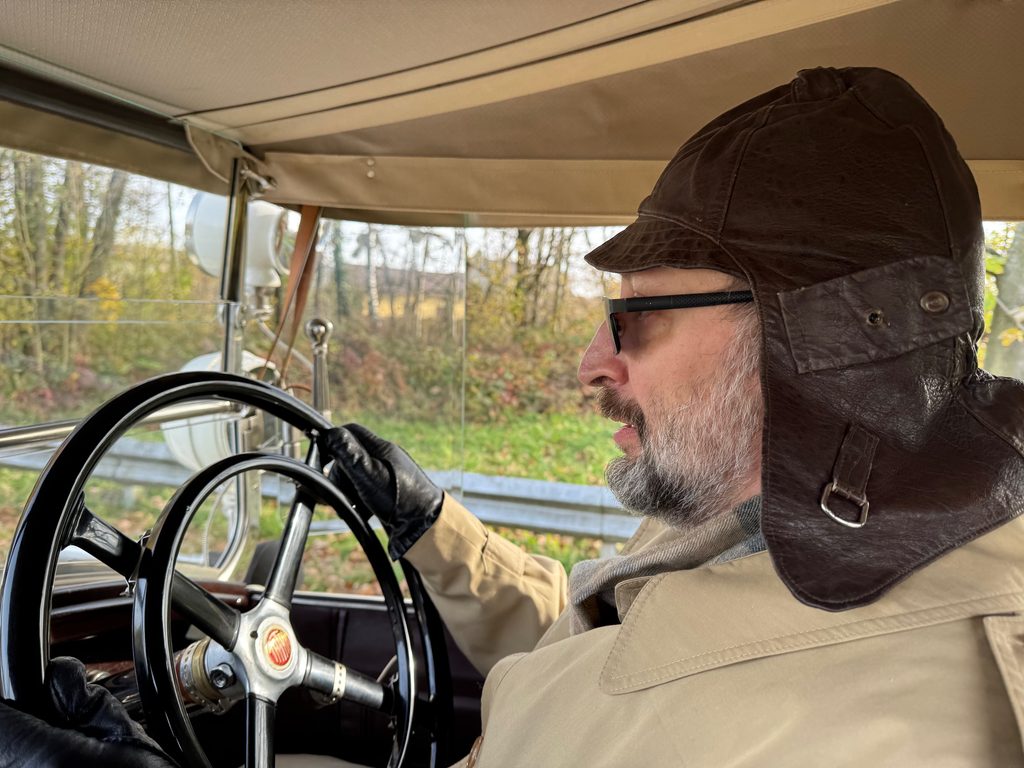
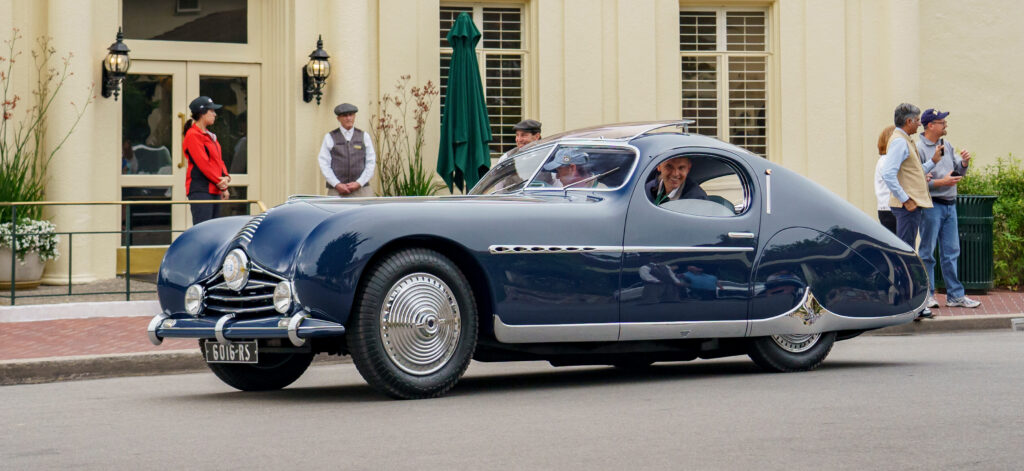
I first met Kasik when I curated a Tatra Class for the 2014 Pebble Beach Concours d’Elegance and he applied with his freshly restored T77, brought it to Monterey, and won best in class. Kasik has since competed at Pebble Beach several times and has brought his cars to other major Concours worldwide, enthralling enthusiasts with his stunning 1948 Talbot-Lago Gran Sport T26 Paris show car, by Saoutchik, a car formerly owned by the late Peter Mullin.
Kudela owns his own impressive restoration shop, although his principal business is the building of assembly line robotic machinery. They are good friends, and I recently visited both overseas.
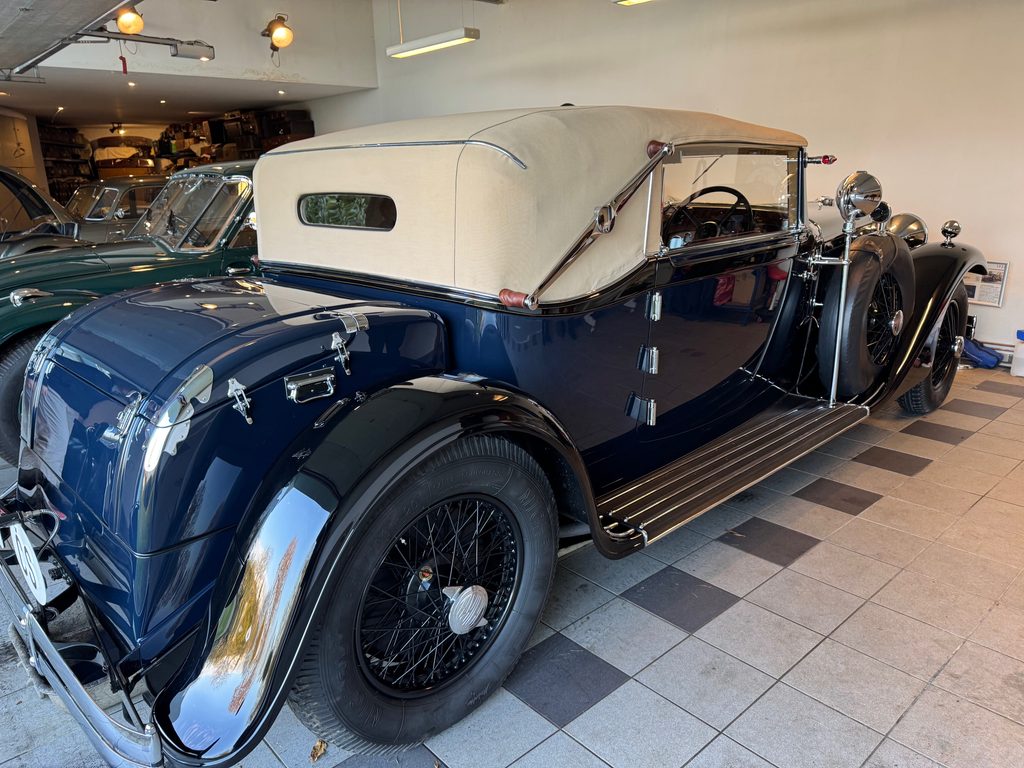
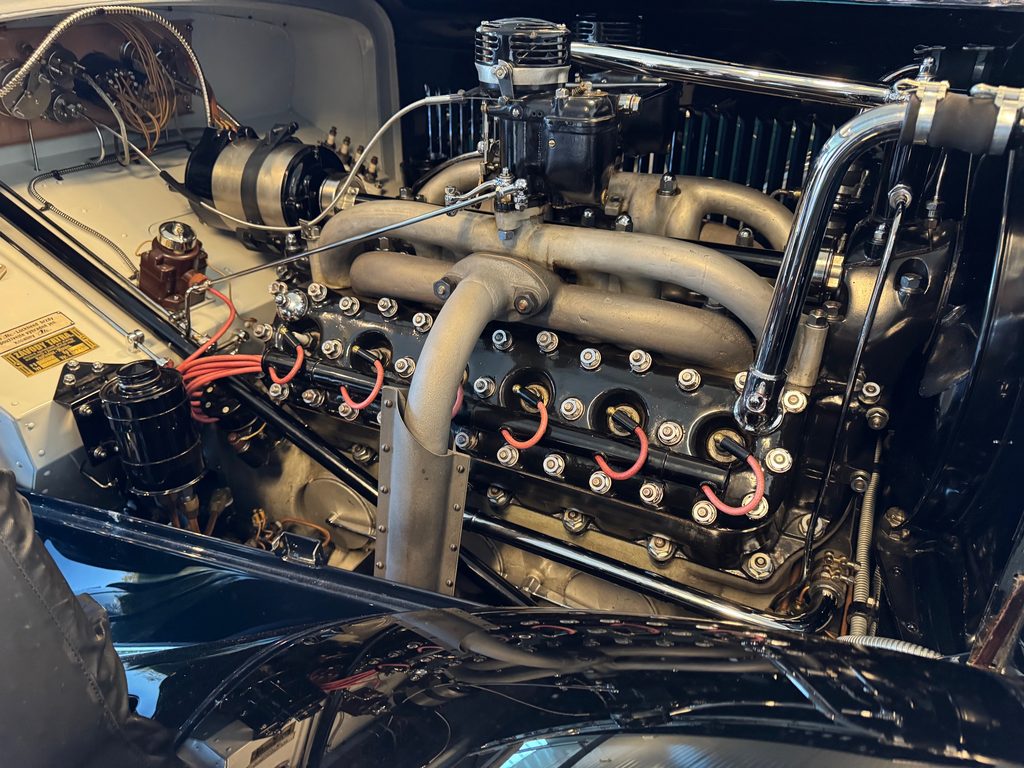
Kasik is currently restoring two Tatra T80 saloons – he already has an ultra-rare, fully restored T80 cabriolet. The Tatra T80 was Hans Ledwinka’s brave foray against Mercedes-Benz’s massive 500K/540K’s and the rival Horch 851. It’s a huge car, featuring a front-mounted 6-liter V-12, with horizontally mounted valves. The T80 rides on an advanced, fully-independently-suspended backbone chassis, that’s perfect for custom coachbuilt bodies. Just 22 T80’s were built, from 1931-to-1935.
Besides his custom-bodied T26’s, Kudela also owns a Talbot-Lago T26 Grand Prix car. Crossing paths, he is currently re-restoring a Tatra T77a that belongs to Miles S. Collier, founder of the Revs Institute in Naples, Fla.
The fact that both these keen enthusiasts are located far off the beaten track, deep in central Europe, has not prevented them from achieving worldwide recognition. Both Kasik and Kudela will tell you that they appreciate the engineering competence of Tatra and Talbot-Lago, and they are happy to share their cars with appreciative enthusiasts.
“As a little boy,” Kasik recalls, “my father had bought a Tatra type 30 from 1929, which already bore all the hallmarks of Ledwinka’s design still used in Tatra today: an air-cooled engine, a backbone frame and swinging rear half-axles. I also admired the successor to the Tatra 77, the T87, which my father bought for me at the age of fifteen at my great insistence. It was the same car with which the famous Czech travelers Hanzelka and Zikmund undertook a multi-year journey across Africa (including the Sahara) and South America, in 1946. Thus began my lifelong love for the brand and the formation of a small but very compact and conceptual family collection.”
“The most difficult thing about renovating my T77, at the time, was the lack of available documents and people who could tell us something about the car,’ Kasik notes. “It meant delving into research in the archives and examining the details of all available existing cars or their components. I had a significant advantage in that I was the first, or rather the only one in the Czech Republic who seriously embarked on such a project. But this was preceded by a long and demanding renovation, reworking many details to my complete satisfaction. With the first generation of T77 cars, there were development changes that were not described anywhere. No two of these early cars were built to be exactly the same, out of fewer than one hundred produced. Colleagues who embark on a T77 renovation today (if they find one anywhere) have a much simpler situation.”
“The reconstruction of the Tatra 80 was even more demanding,” Kasick continues. “But I did not know at the beginning that such a task could not be accomplished,” he says with wry humor.
“That is why I was able to accomplish it in the end. The Tatra 80 was just a disassembled torso of an incomplete chassis, although with a stellar history. It lacked a body and it had been converted into a fire engine after the war, with the car subsequently having been abandoned at a local landfill. The first such progress point was the issue of the cast-iron cylinder blocks. Both were preserved in a totally devastated state – cracked from frost, broken, one had a hole from a punctured connecting rod.
After a professional attempt at welding them, they were even worse. We managed two imperfect castings, which František Kudela (Robert’s father) helped me save and machine. I spent 27 years restoring the T80, which was exactly half of my life at the time. Its own amazing history and the subsequent difficult and sometimes unbelievable journey to its complete reconstruction led me to write a book about this one car called, ‘Tatra 80: Three lives of Schicht’s famous cabriolet.’ I wrote it for myself, so that I could still remember everything!”
And his next restoration?
“From my father’s original collection only the Bugatti T44 and the BSA 500SV motorcycle with a sidecar from 1923 remained. I am not very interested in motorcycles (I never even got a driver’s license for one), but I kept the BSA, even though it is a fairly common motorcycle, with a side valve engine. But it is such an archaic machine, with a carbide lamp and block brakes. As a little boy, I bought it with my father from the first owner, an old engineer from the Praga factory. Soon the renovation, which was originally started during my father’s lifetime, will finally be completed.
It’s different with our Bugatti Type 44 from 1929. I’ve known that car since I was very young – my father bought it when I was about 3 years old. That car has always attracted me, and the Bugatti brand is one of my few favorites. After more than half a century, the renovation of the chassis is finally in its peak phase at a professional company. But I use the same standards as for the other cars in the collection. So, I torment my mechanics with the requirements for installing the original relays, coils, terminals and other details, which have survived only on a small number of cars of this type.”
Robert Kudella takes a similar approach to restoration perfection. “The Talbot-Lago T26 Gran Sport represents a perfect combination of beauty and performance,” says Kudela. “Since I was a child, I have loved cars and speed – it has always been a natural part of who I am. I was raised with a deep respect for classic cars, and as a young boy I dreamed of racing and one day attending a major Concours d’Elegance.”
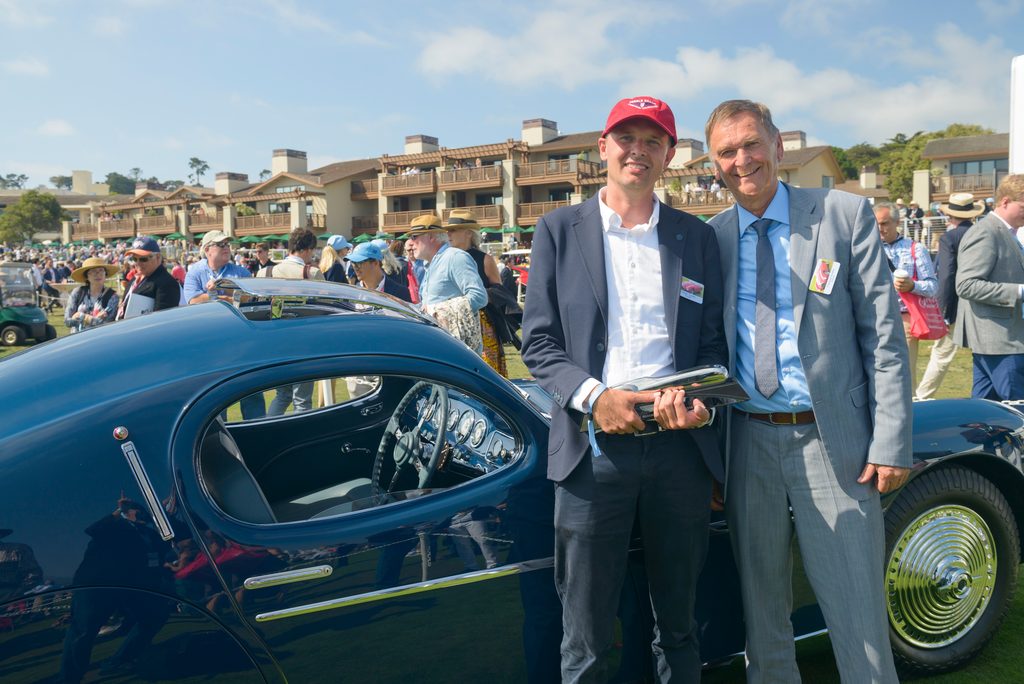
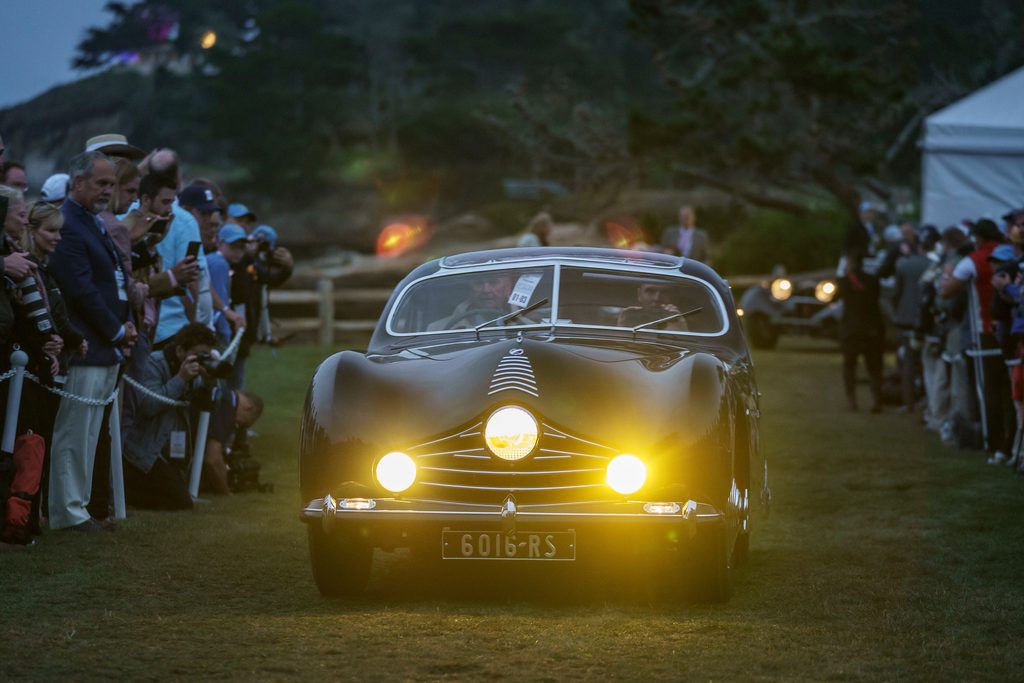
“Through the Talbots,” he adds, “I didn’t just fulfill that dream — I exceeded it. I raced them on some of the most beautiful circuits in the world, I’ve competed at Le Mans multiple times, and I’ve also won awards at prestigious concours events. These cars are the embodiment of a childhood dream I had while working on old wrecks in my father’s garage. For me, they connect passion, history, craftsmanship, and speed in a way very few cars can.
I asked Kudela about his biggest challenge in the restoration of the three Gran Sports
“I wanted to ensure that every detail matched exactly how the cars left the workshops of those legendary coachbuilders,” he explained. “The goal was absolute authenticity — everything had to be original and perfect, but never ‘better than new,’ These are very fast machines, so they must feel stable and precise on the road. This is the kind of work that no one really ever sees, but it’s crucial.”
His trio of Talbot-Lago’s was offered for sale on Axel Schutte’s stand at Retromobile last January. And if they sold?
“I would be looking for another exceptional car in need of restoration — something that can match the beauty, performance, and emotional value of the Talbots. Ideally, it would be a car with racing history and strong character, something that once again combines elegance with speed — because that passion for cars and racing has been with me since childhood and continues to drive everything I do.”
Messrs. Kudela and Kasik share the same values. Their rare and beautiful cars reflect their love of accuracy and perfection. And they drive their cars, setting an example for all who see them.
About The Author

More Stories
Max Effort, Zero Emissions
Car culture, not just preservation, is the future
The Life of Ray Evernham