

New York isn’t supposed to be a car city. Across the entirety of the five boroughs, the speed limit is only above 25 mph about 10 percent of the time. Tolls disincentivize drivers from commuting in and out of the city, and none of my friends who grew up here have drivers’ licenses. Yet one of the biggest celebrations of car collecting is about to transpire in Manhatten this fall. Will it succeed? I’m willing to bet yes.
When Retromobile arrives at the Javits Center this November for its first New York convention, the city will be reminded of its undeniable motoring history and perhaps will embrace its future. Though car-collecting culture in New York City is amorphous and secretive, its day in the limelight will come!
Like many other American things, automobiles passed through the industrializing hands of New York City, although now that history is hidden all around us, eclipsed by subways, ferries, e-bikes, and pedestrians.
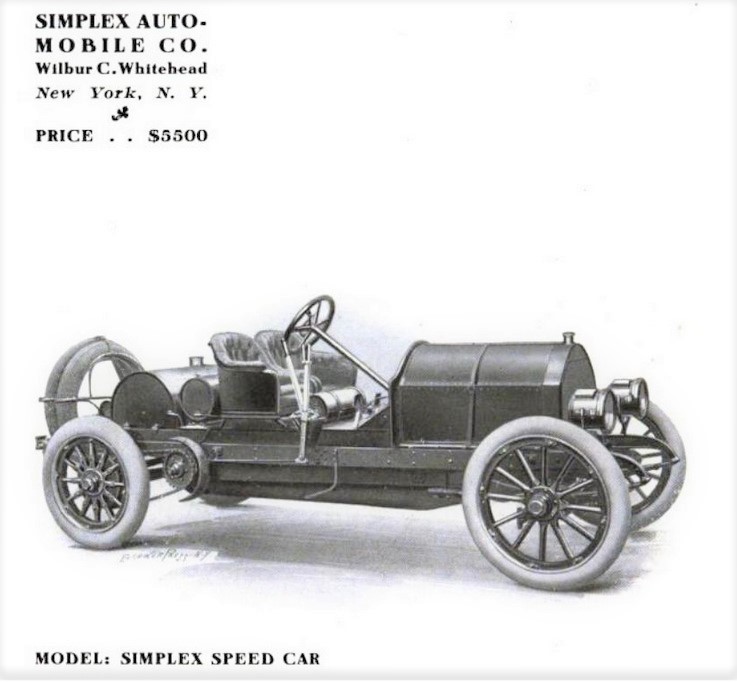
If you walk with me through Brooklyn, there’s a 90 percent chance I will bring up the Roebling family – the engineering titans who built the Brooklyn Bridge and then shortly thereafter, Mercer Automobiles, before Washington A. Roebling II made an ill-fated decision to board the Titanic. “Roebling Street” in Williamsburg is named for the family. A few cars were even manufactured in New York City – the mighty double-chain-drive Simplex cars briefly had their factory below Columbus Circle, and the Brewster Building in Queens still stands (and is now the headquarters for Jet Blue Airlines).
Though the city did not quite meet the manufacturing call to action, car enthusiasts still demonstrated an appetite for driving, mostly on weekends, and often outside of the bounds of the city.
Legendary Trendsetters
Max Hoffman and Luigi Chinetti are two legendary names in the New York City car world, both of them importers who made New Yorkers actually want cars. Naturally, two immigrants to the U.S. became the arbiters of automotive cool in New York and created demand for chic cars, rather than comparatively ho-hum domestic iron.
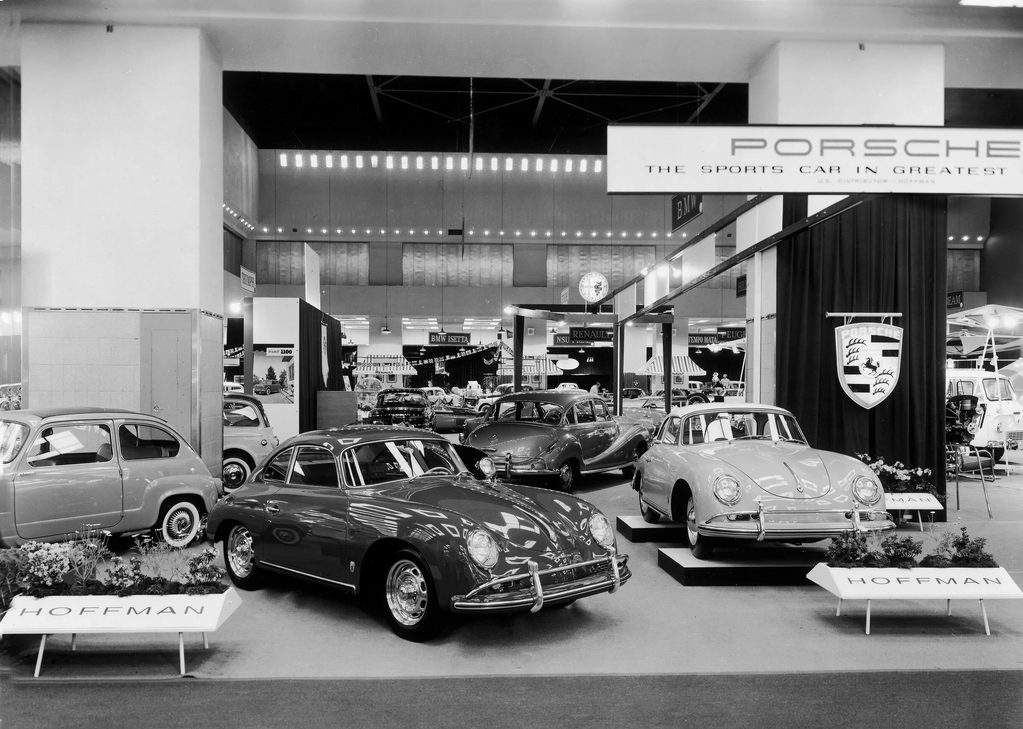
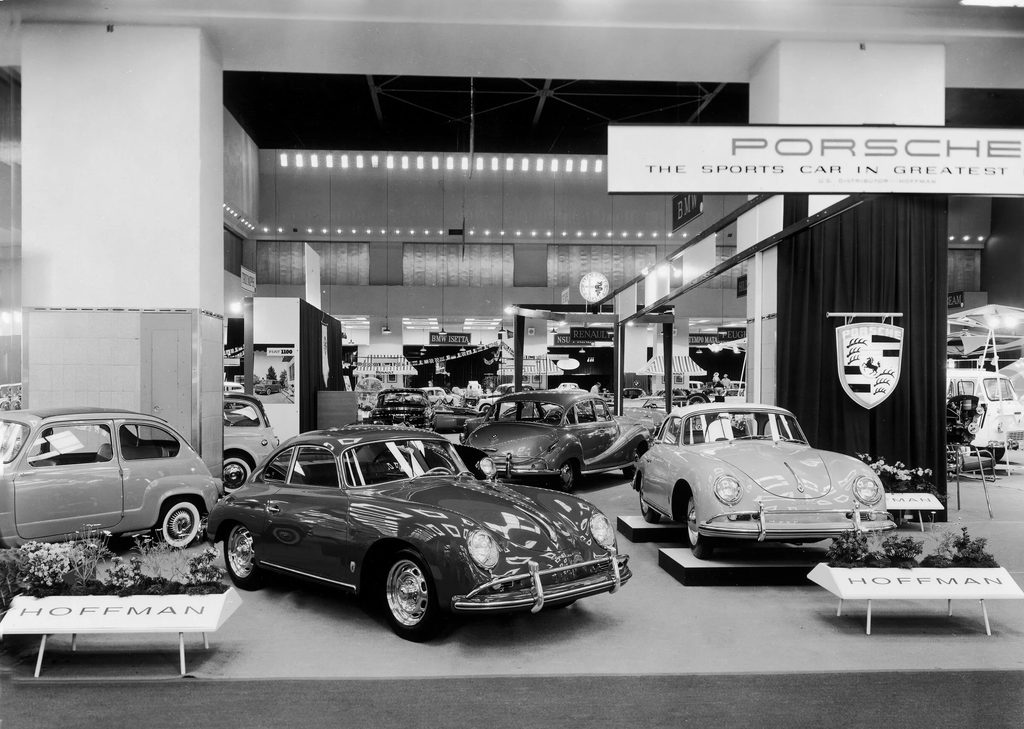
Max Hoffman, an Austrian immigrant, capitalized on the lack of authority in New York City when it came to imported cars and opened Hoffman motors in 1947 – first importing Jaguars, then Volkswagen, before becoming the importer and sole distributor for
Mercedes-Benz in 1952. He is a large part of the reason the Gullwing exists and is also credited with popularizing Porsches with the 356 Speedster. Ever a tastemaker, he commissioned Frank Lloyd Wright to design his house in Rye, N.Y., as well as his showroom on Park Avenue. Hoffman is essentially credited with marketing imported cars to New Yorkers for the first time, whether it be for sporting outside of the city or showing off on Park Avenue.
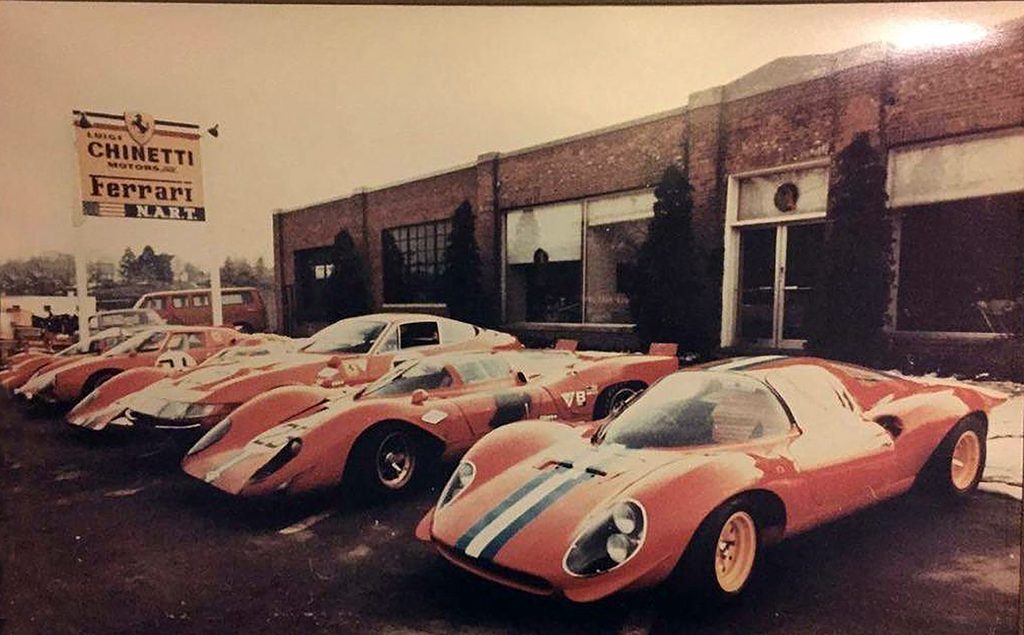
You likely have heard of Luigi Chinetti, the successful racer-turned-salesman who developed a strong business and longstanding friendship with Enzo Ferrari. He singlehandedly made New Yorkers – and the rest of the U.S. – want to buy Ferraris, conveniently at a time when Europe was still recuperating post-war. With talented drivers like Phil Hill, Dan Gurney, Mario Andretti and countless others, driving for Chinetti or on the NART Team, the cars had amazing success.
Today, the New York car scene can appear at times somewhat mixed; there seems to be two cultures. One is a world of exclusivity, membership, and velvet ropes. The other, cafes, meetups, and galleries. It’s a classic tale of Old New York versus New New York. Manhattan might be the private members club capital of the world – bore me with the Colony Club, Metropolitan Club, Zero Bond, Chez Margaux and more. The same extends to cars. Most notable is the Classic Car Club of NYC, where members can pay $5,000-$15,000 to drive around one of their supercars for a few hours each month.
Of course, like every other good thing in New York City, the time has come along for a private equity big thinker to rework car collecting. Meet Rally, where cars are “the second most popular alternative investment (surpassed only by art).” Investors on Rally can buy into “shares” of a car, like a 1985 Ferrari Testarossa or 1955 Porsche 356 Speedster, as though they were a stock.
But like any great experience in New York City, the best things are free. Or free-ish.
The historic (since 1957) Madison Avenue Sports Car Driving and Chowder Society (or Chowder) is anti-pretentious and has a sense of humor understood best by those who save their money for expensive restorations, not Hamptons Beach houses. The membership card stipulates that club officials won’t assume “liability for any claims, including bar bills, arising from the actions of the holder, … put up bail for him, or … even, when in decent company, recognize him on the street.”
Modern Influencers
And the cast of characters is getting cooler. Noeline Cuker runs Cooper Classic Cars in the West Village, a business she ran with her late husband, Elliot. Though the business was started selling classic Rolls-Royces and Bentleys to well-to-do uptowners for their chauffeurs to drive, she notes that the business has shifted. “We are seeing a very inclusive culture,” says Cuker. “Everyone who is interested in vintage is welcome to our Cars & Coffee meetups. In the last five to seven years, we’ve seen a huge shift towards demand for European sports cars among the younger generation.
“Sure, the younger people are collectors, but they don’t want something that takes up space or is complicated. They want something small and fun that they can drive to the beach and back again,” says Cuker. “Because there’s so much access to information when it comes to researching the cars, and where to get your cars serviced, they don’t need an authority to show them the way.”
Her business deals mostly in Porsche 911s, Mercedes models from the 70s onwards, and 80s and 90s BMWs. Located in Manhattan’s West Village, the gallery’s glass doors deconstruct the idea that these cars are hidden for New Yorkers in exclusive garages but rather should be enjoyed by all.
Whether or not young New Yorkers are actually in the market for cars doesn’t matter in this iteration of car culture. It doesn’t even matter whether you can drive – as long as you appreciate the aesthetic.
Wesley Breed, a men’s fashion writer-turned-influencer-turned-car-influencer, has his finger on the pulse of what young New Yorkers, and social media users everywhere, for that matter, want to see. He posts amazing videos, with nearly poetic commentary about his travels, fixations, meetups and more. “The odds are against car enthusiasts who live in New York, but still, we find a way to express our passion,” says Breed.
“It’s, all things considered, not a drivable city,” he goes on. “There are so many factors – the bumpy roads! Because of that, owning something fast and flashy doesn’t really make sense. Because of that challenge, the level of enthusiasm here transcends trends. You’re not seeing S-tier hyper cars, so people are gravitating towards the oddballs. New York City Cars and Coffees are always an eclectic mix – it’s everything from right hand drive Japanese import to a tech bro with a Bugatti Veyron.”
Take the recent deluge of car inspired cafes – Field Study in Brooklyn is located inside a showroom with classic Alfas, vintage Lancias, and BMWs, as well as Coffee Project in Tribeca, which also regularly hosts meetups. You could even look to the popular men’s store, Buck Mason, epitomizing the concept of a lifestyle brand. Inside most of their stores, an impossibly placed 70s Porsche 912 sits, mainly just to make male shoppers equate a $50 t-shirt with owning a vintage car. It’s all part of the city’s car culture – you can’t have the motorheads without the aesthetes.
Does this create tension between the priorities of the people who know the legacy of Luigi Chinetti and those who covet automatic cars from their childhoods, like a BMW E31 850Ci? Most definitely. But New York City could use more instances where the traditionalists hang out with the young, hustling kids – under the literal glass ceiling of the Javits Center.
About The Author

More Stories
Brass Era Cars…
Five Miles an Hour to Trouble
The Magarigawa Club