


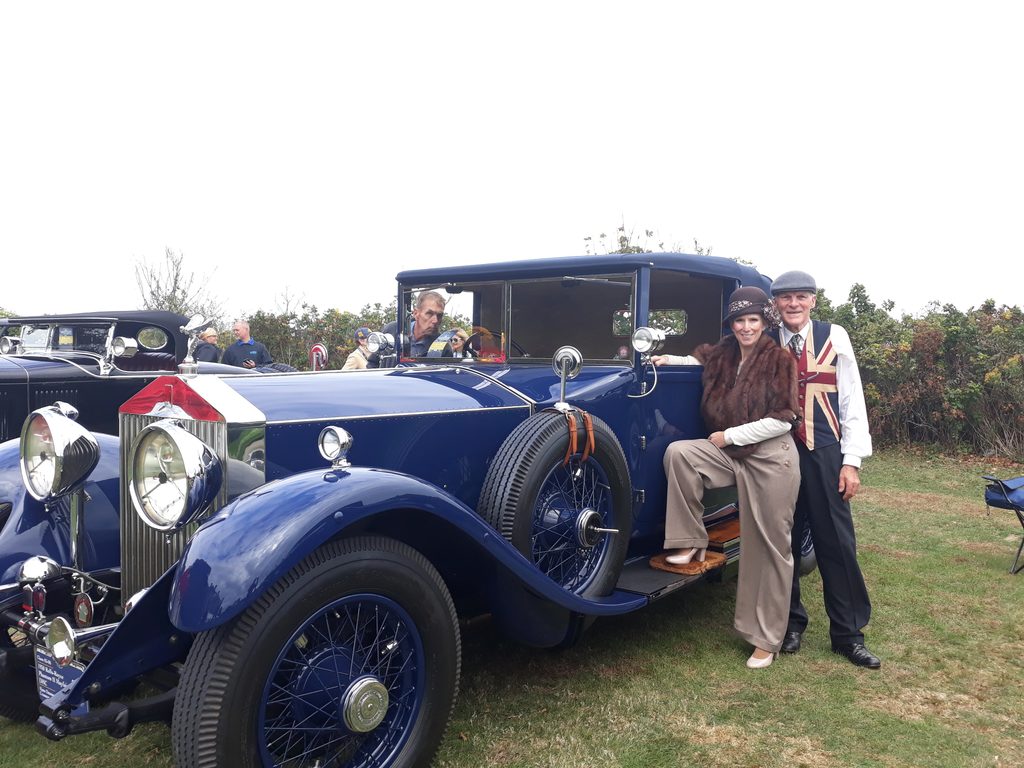
WINNING IS EASY. At the risk of offending those still under the impression that money spent on a concours-level vehicle isn’t often a factor in its success, I assure you it is. And that’s not necessarily a bad thing or something collectors should be ashamed of. It’s not a big secret. Like anything else in life, you get what you pay for, and quality is typically reflected in price. It’s perfectly fair to celebrate a win which stems from a great deal of investment. But isn’t recognition so much sweeter when you’ve paid your dues in blood, sweat, and tears? Hans Deamer seems to think so.
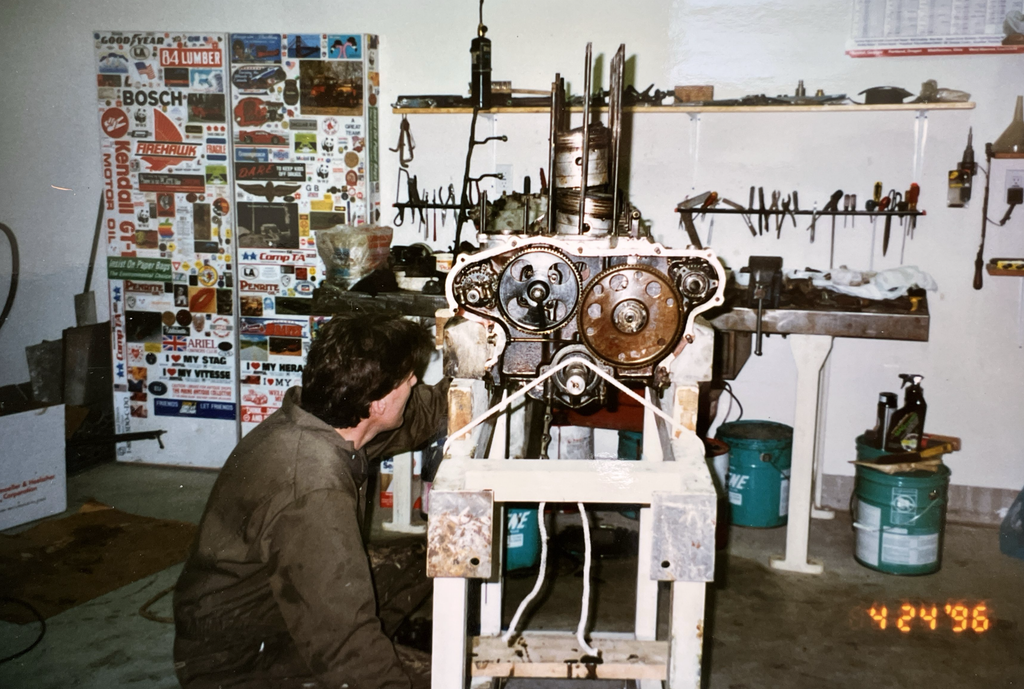
Hans, soon turning 77, has restored vehicles since he was eleven years old. His introduction to the trades came courtesy of his father, Arthur George Deamer — a fascinating man who deserves a feature of his own. To make a long story short, Arthur was a soldier in the Second World War, recruited during his time at de Havilland Aircraft Company. He believed building planes was his contribution to the war efforts, but was sternly told he had more to give for his country and was sent to Bletchley Park where he became a part of the original team responsible for decoding the German Enigma ciphers — an operation said to have saved nearly 14 million lives.
After the war, Arthur continued his tenure at the company and joined their engineering club, which allowed employees to use machinery for personal projects. On the weekends, Hans would accompany his father to the shop where he admired and absorbed the sights, a time he fondly recalls.
“From five years on, I would go every Saturday and Sunday,” he says, “and I’d go and mess around with the machines and nearly cut my bloody hands off half the time, but I’d watch what my dad was doing… he’d be welding, cutting out rusty sections of these ancient cars from pre-war… I used to be so impressed with what he did, I got into it too!”
No shortcuts
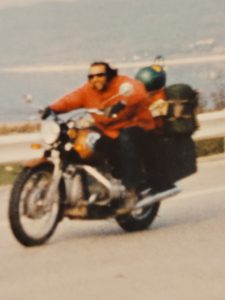
Hans Deamer’s entry point to the hobby was a more accessible means of transportation — motorcycles. As a kid, the self proclaimed “cheeky little bastard” approached a neighbor and asked if he could have the bike lying beside their house. Not being worth much, they obliged. “And I did that with loads of them. Picked them up, got them going, and rode them in the fields, because I was only, eleven, twelve, thirteen,” says Hans.
Just a handful of years later, he returned to the very company where his father worked and both began developing their auto-repair skills. At this time, Hans was 16, and his love for motorcycles was still strong, but his attention was caught by a growing interest in vintage cars. He remembers pages of ads for old Rolls-Royces and Bentleys, some with measly asking prices of £50 or less, and his “silly dream” was “to buy one [Rolls-Royce] and do it up.” In the midst of starting what would be a seven-year apprenticeship, at which he earned a mere £2 per week, this dream was simply out of reach.
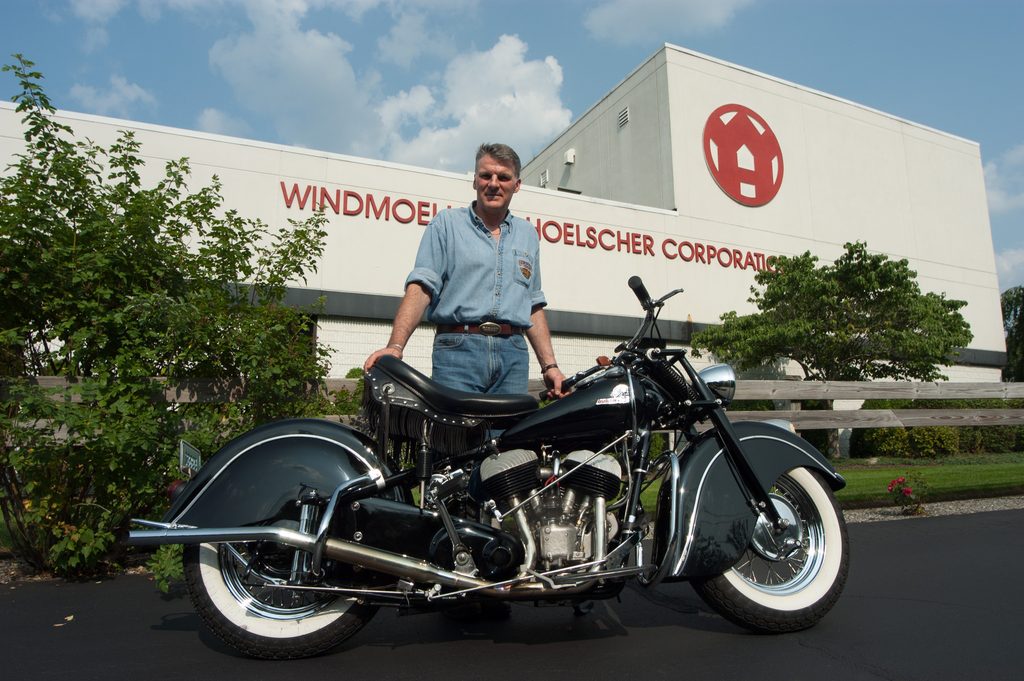
Thus, when Hans got his license, he settled for a Renault Dauphine and the thrill of fixing up whatever he could get his hands on and flip for a small profit. Even during his first full-time sales job, he kept his skills sharp by treating automotive repairs as a second gig. In the 60s and 70s, he set his sights on Austin and Morris Minis.
“You could get rusty Minis for a couple of pounds… and just like my dad used to, cut out all the rusty panels out and weld them in, and then sell the car for another hundred pounds than I paid for it,” recalls Hans.
If he wasn’t buying, fixing, and selling cars, Hans was offering his body work and paint services. “In my spare time, all I did was paint peoples’ cars. I’d charge them five pounds to sand down and paint their Mini. And I’d take it on Friday night, and they’d come and get it on Sunday. That included paint,” he says.
New beginnings
Following an education at LetchworthCollege of Technology, where he earned a degree in mechanical engineering, Hans continued his career at International Computers Limited in Hertfordshire, England before being hired by Windmoeller & Hoelscher Corporation in 1979. In January of 1980, he was asked to move to the United States to be their product manager. He obliged. During his 35 years with the company, he rose to the title of President and Treasurer and grew the organization’s employment and sales exponentially.
Eventually, his success in business allowed his coach-built dreams to become a reality. In the mid-90s, while searching for his next project on the West Coast, Hans stumbled across a 1930 Rolls-Royce Phantom II Drophead Coupe, with a unique body by Mayfair Carriage Co. Without hesitation, he made the purchase and had it shipped to his home in Rhode Island.

Mettle on metal
The Phantom appeared decent at a distance, but sure enough, it was derelict. From deteriorating body panels to a corroded engine with massive holes in the head, it needed everything. But like any other car or motorcycle he had owned and repaired in the past, Hans was determined to do the work himself. However, even he would admit that he wasn’t an expert in Rolls-Royce restoration.
In fact, Hans expressed that he had no idea what he was getting himself into, but he knew he could learn as he went, and that his can-do mentality would ensure everything would be completed to the highest of standards — not because he hoped for awards, but because he takes pride in being a custodian of special automobiles. “I want the most perfect thing I can produce. That’s my drive,” says Hans.
Obviously, perfection is not a leisurely pursuit. The Phantom’s body-off, ground-up restoration took the better part of a decade, including relentless correspondence with those who knew any piece of the car’s history — another story worth a few thousand words.
It changed hands countless times between eccentric owners, mistresses, dealers, and exporters. It lived in England, disappeared for nearly twenty years, was destined for Japan, put up for government auction, and eventually brought back to life in the smallest state in the union.
And despite it not being Hans’ intentions, the car’s resurrection to its former glory attracted the attention of the Rolls-Royce Owners’ Club, winning the coveted Guerrero Trophy for best personal restoration — a true testament to his craftsmanship.
The verge of victory
In 2019, Hans showed his Phantom at the inaugural Audrain Newport Concours d’Elegance. It came second in class to a car that went on to win Best of Show — a 1927 Isotta-Fraschini Tipo 8A S Fleetwood Roadster which now belongs to the Audrain Collections. Hans has since returned to every Audrain Newport Concours & Motor Week with several vehicles, both four and two wheeled, all of which he fully restored himself — paint, upholstery, mechanicals, etc. Unfortunately, this might be the last year Hans will have a personally restored car in contention. He’s run out of viable entrees and regardless of having his wits about him, he’s decided to move into the preservation stage of his automotive endeavors — keeping his vehicles in tip-top shape and offering his expertise and time to family and friends.

Once more
Hans’ passion for motor vehicles is palpable. He’s like a runaway diesel, once he starts talking about cars and bikes, there’s no end in sight, and he’s very aware. I was fortunate enough to have several conversations with him, which were all prefaced with “shut me up if I have too much to say.” But not once did I find myself bored. If you too find yourself so lucky as to encounter Hans, make sure you take some time to listen; I guarantee you’ll learn a thing or two.
On October 4, 2026, Hans will drive his Jaguar XK140 onto the Newport concours field — certainly hopeful yet undeniably proud regardless of outcome. But wouldn’t it be so sweet to see him win?

About The Author

More Stories
Echoes on the Green
A Good OL’ American Supercar
An Introduction To FIVA