


The Pilgrimage & The Sanctuary
The journey to Noyack Hills feels like a slow transition between worlds. Catching the 2:00 PM ferry out of New London on Friday, crossing the Long Island Sound to Orient Point, and heading down the North Fork toward Sag Harbor sets a deliberate pace. Long before pristine grass and manicured greens blanketed these rolling hills, this dirt belonged to something far more visceral. In the 1960s, the Bridgehampton Race Circuit was a brutal, wind-scoured 2.85-mile ribbon of asphalt— where giants like Dan Gurney, Bruce McLaren, and Stirling Moss wrestled wide-tired Can-Am monsters over blind crests and trackside sand drifts.
When the last checkers fell in 1998, the engines went quiet, and the circuit was buried beneath the fairways of a private golf club. But once a year, during The Bridge, this quiet golf club opens its doors to an automotive resurrection.
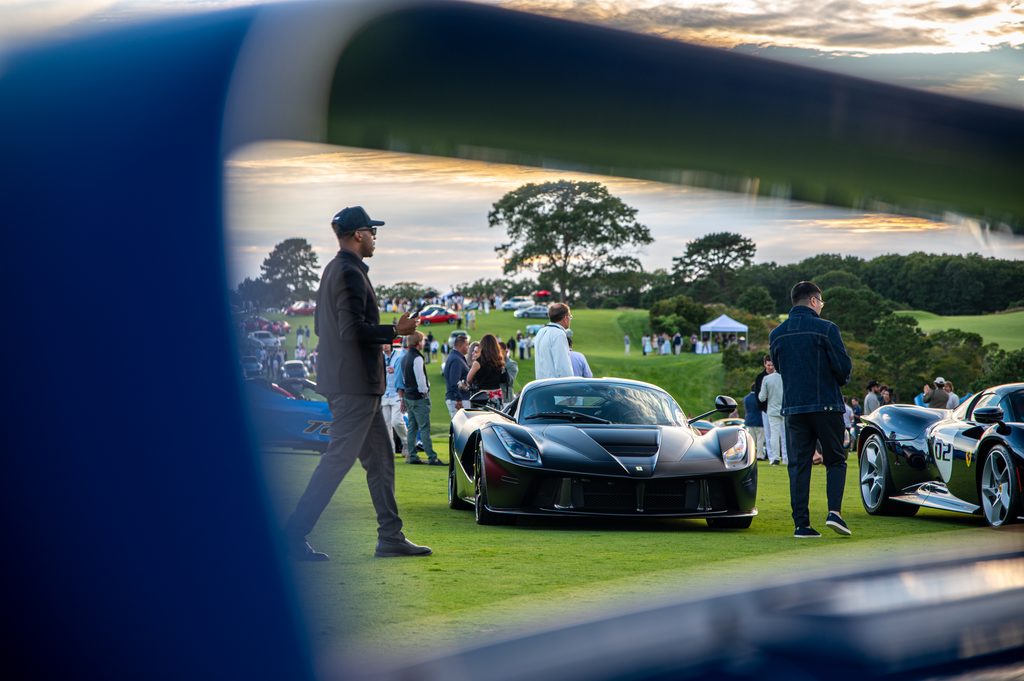
Arriving at the staging area just before noon on Saturday allowed for an early shuttle ride over to the grounds. Riding solo on the bus while trucks and enclosed trailers clogged the main drive, the sense of anticipation built quickly. Then, the clubhouse emerged, and the scale of the gathering hit immediately: a Tequila Patrón Ferrari 458 GT3 race car, ultra-exclusive Porsches, Aston Martins, and vintage motorcycles greeted attendees before they even reached the main gates. Walking past the main entrance into the Mercedes-Benz display—where classic Mercedes icons sat alongside the AMG ONE—the sheer density of automotive history was almost overwhelming.
The Evolution of Speed
After checking in at the media center, luck proved to be on my side. Set inches from the very straight they once raced, the historic competition grid—the very soul of Bridgehampton’s legacy—was display-parked directly adjacent to the media building. Standing among them was the iconic DeKon Monza (a car I’ve had the pleasure of watching run at speed during HSR events), featuring a photo resting against it showing driver Bruce Waller lined up on the start line right next to Paul Newman. Surrounding it was a heavyweight contingent of classic Porsche endurance racers and American performance icons.
These hand-hammered, analogue race cars were built in a time when speed came down to gut instinct and sheer bravery. Body panels were shaped by hand over wooden frames, aerodynamics usually meant riveting an aluminum spoiler onto the rear deck, and downforce was pretty much calculated by trial and error. Peek inside the cockpits and you won’t find digital screens or telemetry—just bare floorboards, heavy toggle switches, a gated shifter, and a high-compression engine waiting to see what the driver is made of.
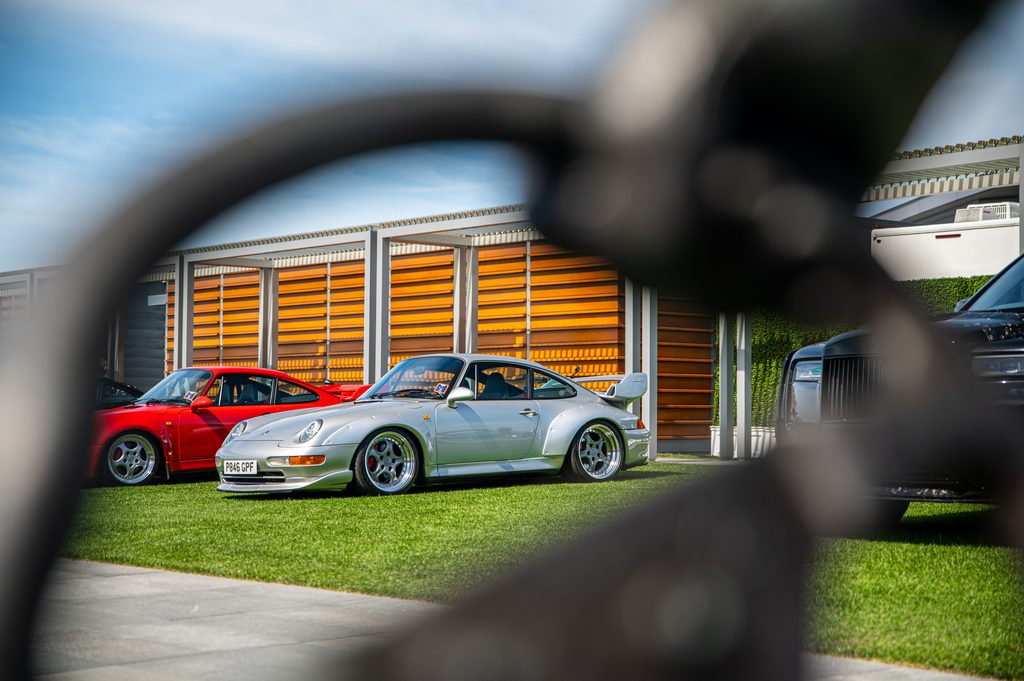
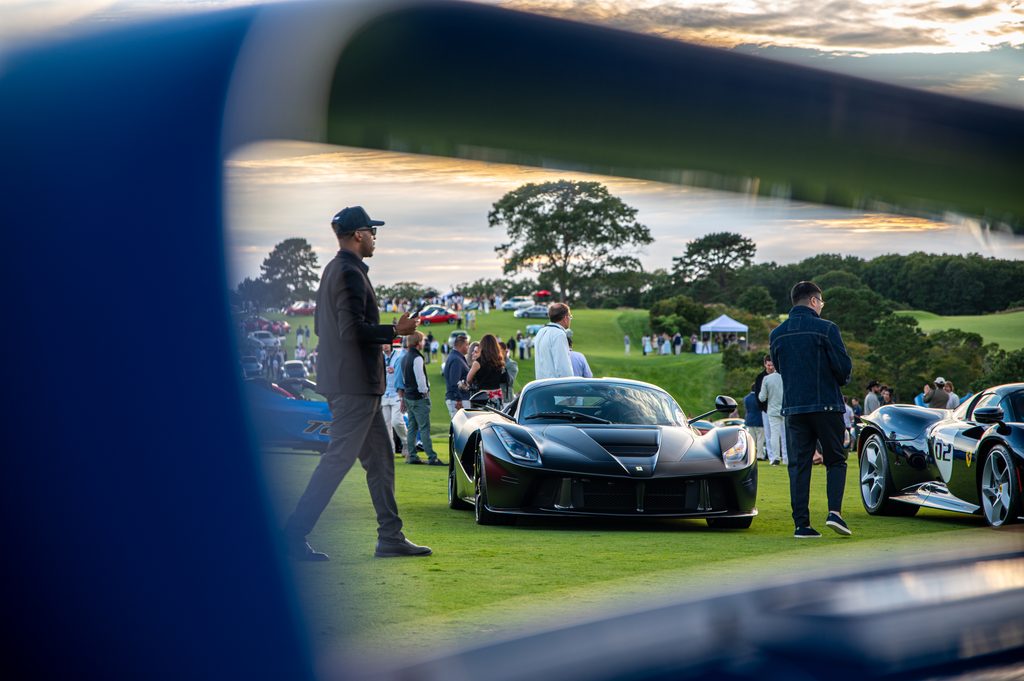
Wandering onto the first hole of the course, the landscape opened up to reveal a sea of Porsches, including my friend Noah’s stunning Meissen Blue GT3 RS standing out against the green fairway. Moving deeper onto the main fairway, the layout literally took my breath away.
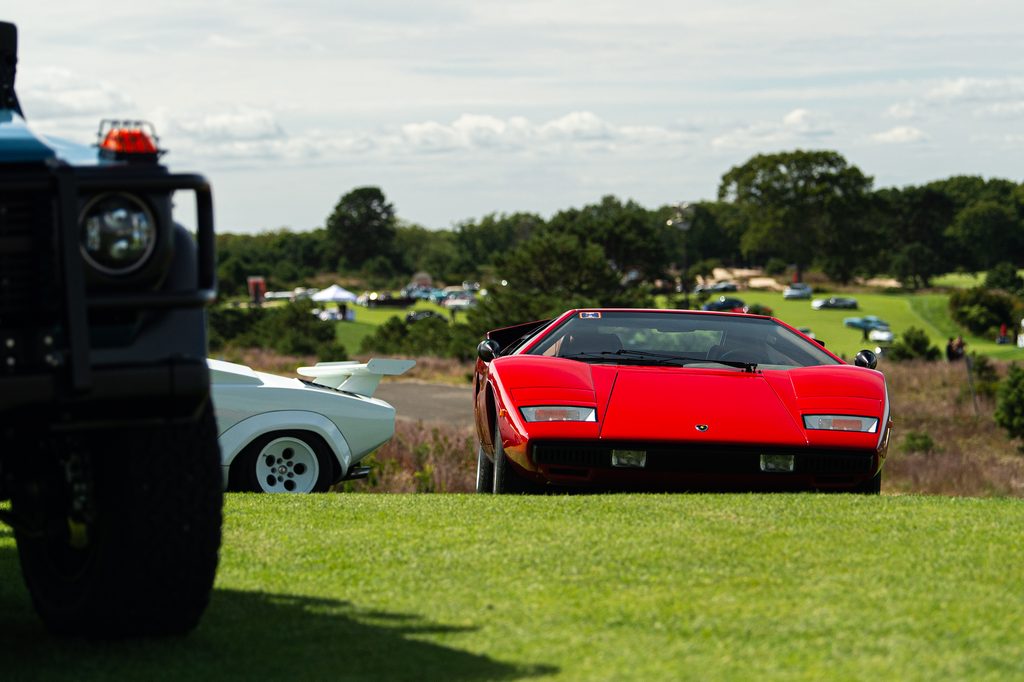
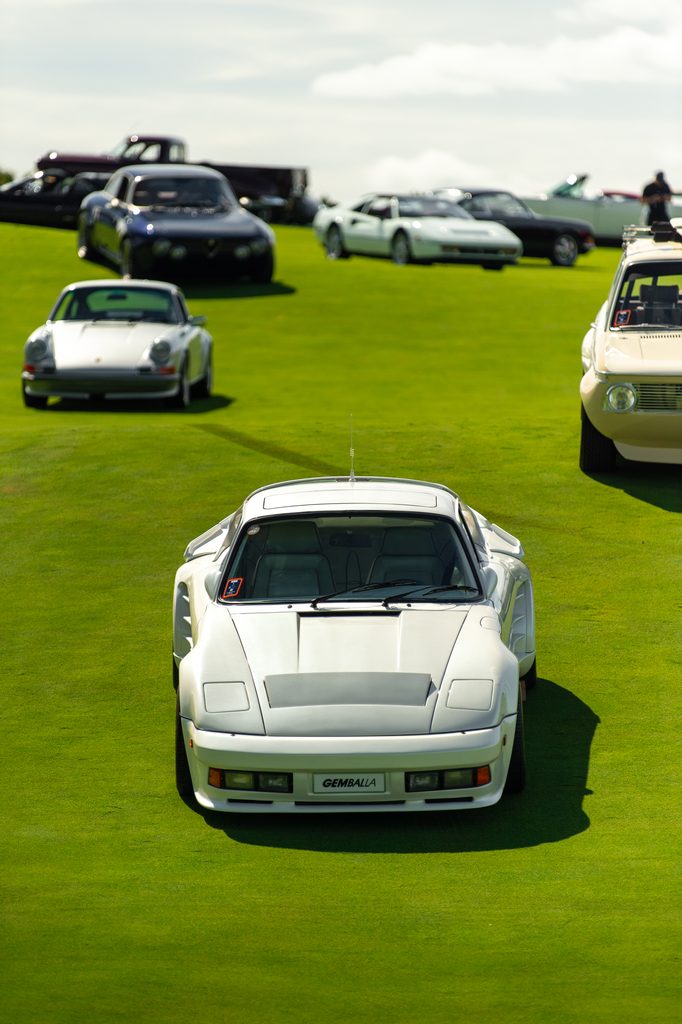
Here sat the hypercar descendants of those early racers—masterclasses in CFD and molded in seamless carbon fiber. The lineup was staggering: a Koenigsegg Jesko and CC850, the Czinger 21C, Pagani Utopia, and a Porsche 918 Spyder. Nearby, a Maserati MC12—a personal first for me—sat flanked by an F50 and a brilliant yellow Enzo, surrounded by bespoke coachbuilt creations from Singer, Gunther Werks, Gemballa, and Porsche Sonderwunsch. Where the vintage racers relied on raw mechanical force, these modern icons use active aerodynamics and hybrid powertrains. Yet, standing between a DeKon Monza and a Pagani Utopia on the same lawn, you realize the core idea hasn’t changed in sixty years: a relentless pursuit of performance without compromise.
The Ghost Circuit & Living Artifacts
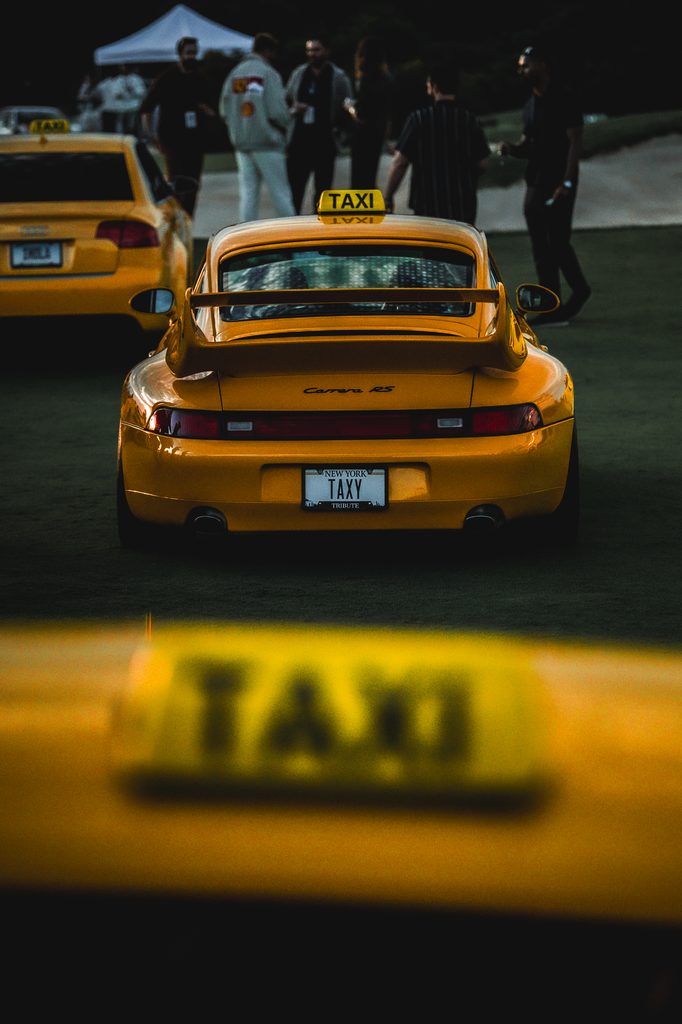
Beyond the hypercars and boutique builds, The Bridge thrives on its unique memories and eclectic touches—including a curated yellow cab concept and vintage bus exhibit that added a layer of pure New York culture to the grounds.
The physical ghost of the original racetrack hasn’t totally vanished. If you walk up toward the highest point on the property, you’ll run right into the most iconic landmark on the whole grounds: the historic Chevron footbridge. Back in the day, legendary Can-Am monsters thundered under this steel bridge on the front straight at over 160 mph. Today, it just sits quietly over the green grass. But stand underneath it for a second, and it’s pretty easy to imagine the earth-shaking howl of a big-block V8 tearing down the strip.
Even though the land was turned into a private golf club, the old circuit refuses to fade away. Look closely at the edges of the fairways and you’ll catch patches of sun-bleached asphalt peeking through the turf. You can still trace the sweeping arcs of Turn 4 and the notorious “Millstone” turn just by following the shape of the land. Inside the clubhouse, old pit boards and historic race photos line the walls. At The Bridge, you aren’t just hitting a car show on a golf course—you’re hanging out in a living shrine where the ground still remembers what it felt like to go fast.
About The Author

More Stories
Deam Big or Go Home
A Good OL’ American Supercar
An Introduction To FIVA