


Photos by James Mann
WHEN 007 AUTHOR Ian Fleming started discussions to illustrate “Chitty Chitty Bang Bang,” his ideas for the famous magical car were far removed from the film version. As with James Bond’s cars, his inspiration was the Bentley marque.
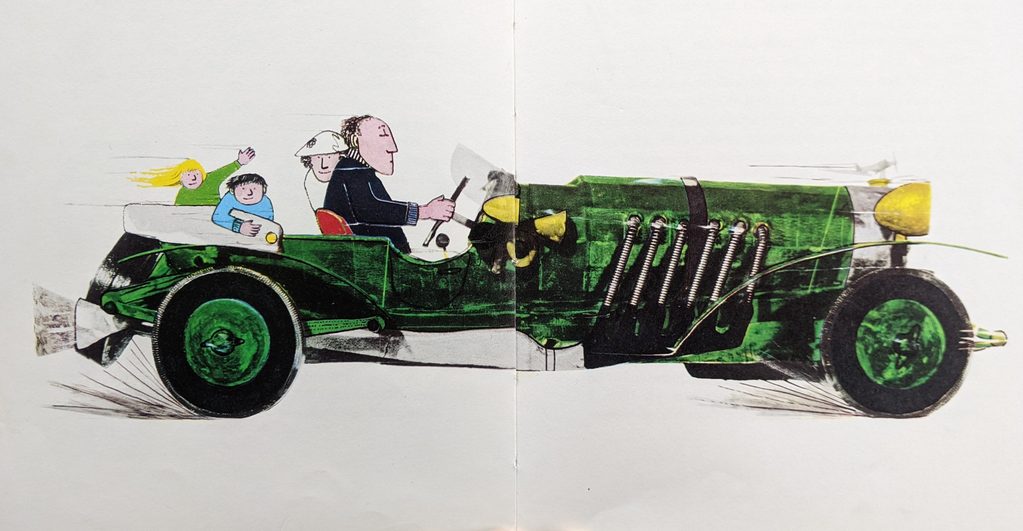
Together with supercharger wizard Amhurst Villiers and award-winning illustrator John Burningham, they conceived a spectacular green vintage machine with dramatic side exhaust pipes.
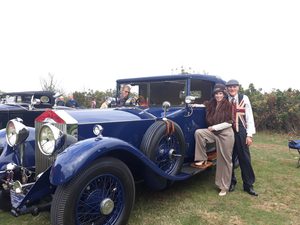
Those first “Chitty” designs were revealed in 1964 when Fleming’s only children’s book was printed, and were an uncanny match to a famous bespoke Bentley conceived 30 years earlier by the pioneering aviator Captain Vivian Hewitt.
Flush with a large inheritance, this Grimsby born enthusiast acquired a spare 8-Litre chassis from the bankrupt Bentley factory and with top specialists began the build of a high-performance machine, which later inspired illustrator Burningham’s artwork.
Hewitt was fanatical about the car’s specifications and style. To achieve his ideals of lightweight performance, he enlisted Nobby Clarke, the former head of the Bentley race team workshop.
With increased compression, twin SU carburetors, and modified Bosch GF6A magneto ignition, the 8-Litre engine produced 225bhp at 3500rpm and with a 3.3:1 axle ratio, this pre-war supercar would effortlessly achieve 110mph.
With his aviation experience, Hewitt believed lightness was the key to performance.

The massive steel chassis remained standard, but Hewitt specified that Triplex Hartford shock absorbers should replace Bentley’s standard hydraulics while extra massive straps were fitted to further control the rear axle movement.
The brakes were modified to match the Speed Six Le Mans team cars with self- wrapping front drums fitted while the Dewandre servo was removed. The F-type “crash” gearbox remained standard, but both the gear lever and special handbrake were mounted outside the narrow bodywork.
The most impressive feature of the cockpit was the special aluminum dashboard which was packed with instruments including a large speedometer and rev counter. Hewitt also requested double magneto switches and a special rotary switch for the Autopulse fuel pumps that matched the race cars.
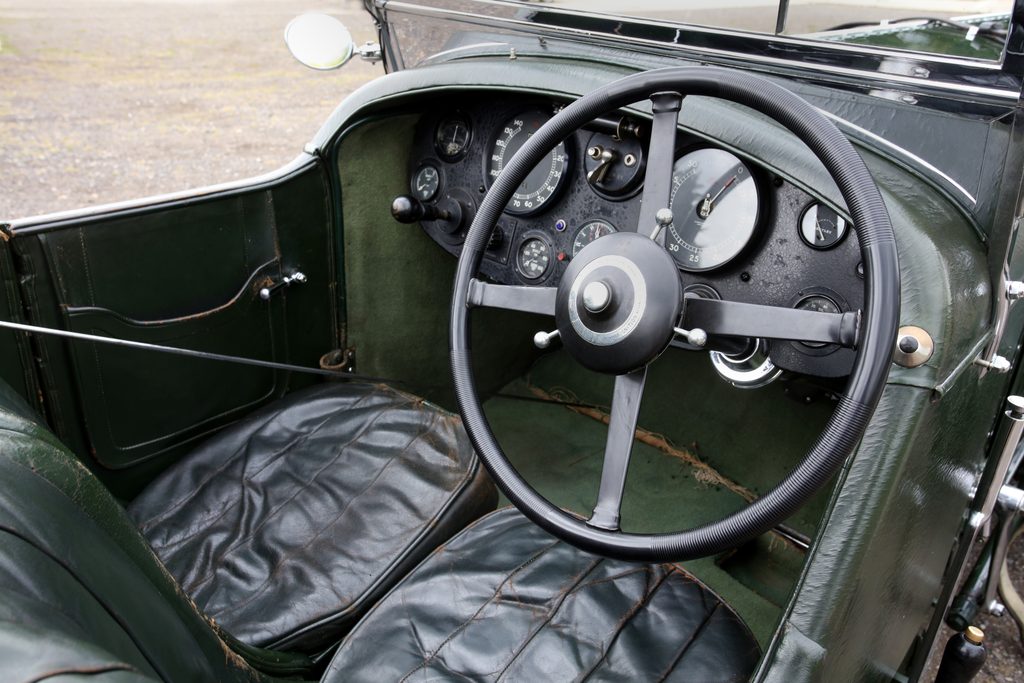
The initial idea for the dashboard was a blue steel sheet finish, but this was later changed to black. Other racy details included a roller pedal central accelerator and a Bosch horn button mounted on the driver’s cutaway body side.
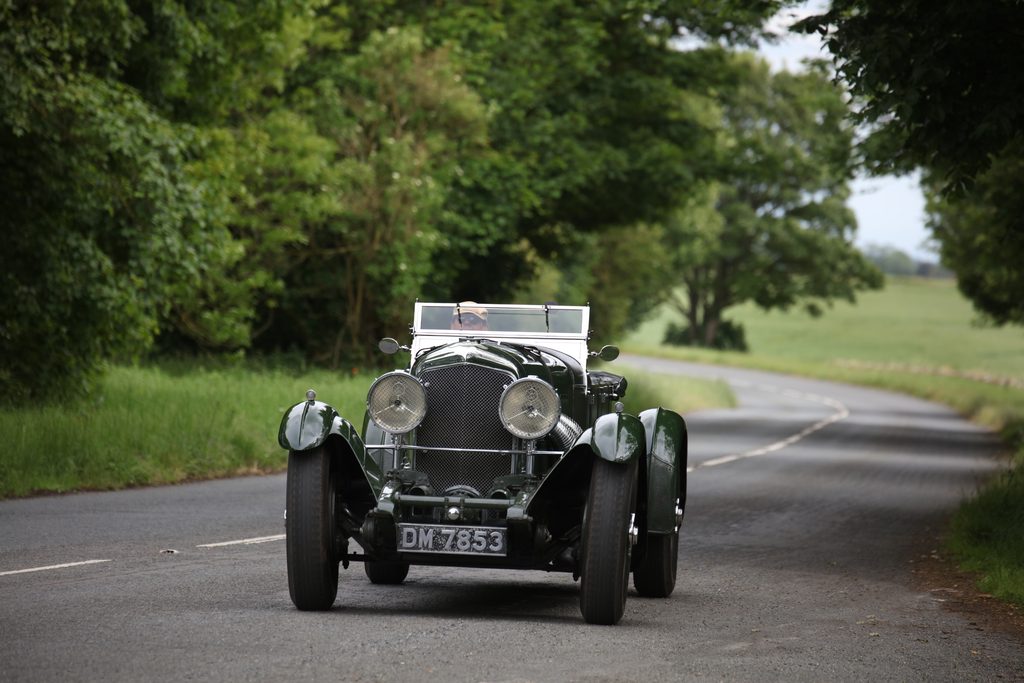
For the body build Hewitt went to Vanden Plas who had previously constructed the fabric Weymann style bodywork on the Bentley racing cars. Again, Hewitt was very particular about the details which included extra bonnet louvers, lower windscreen, three doors, toolboxes, and chassis steps. Hewitt even designed his own wings which were mounted closer to the wheels.
The 8-Litre’s standard radiator shutters were replaced by a chrome stone guard with matching mesh protection for the headlights. The rear styling was dominated by a special 65-gallon petrol tank with a racing style double-action filler cap and painted side guards. A single spare wheel was mounted off the rear chassis cross member.
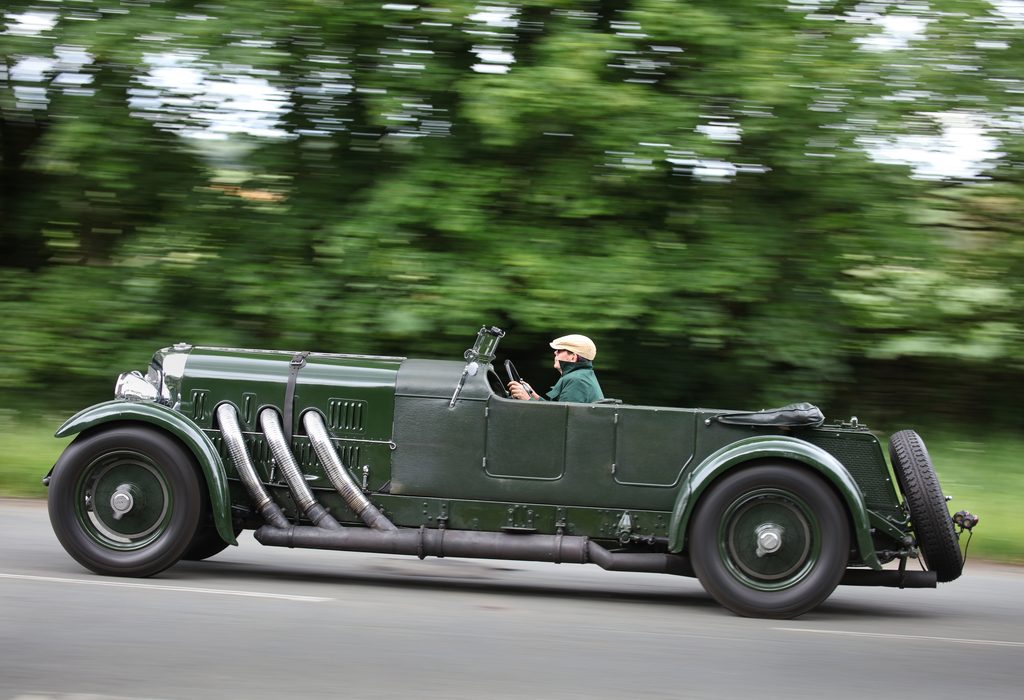
But the most distinctive visual feature was the spectacular outside exhaust system, which was clearly inspired by rival Mercedes Benz. Three dramatic downpipes sprouted out of the long bonnet side to a huge conical collector that ran the length of the chassis to a Brooklands style fishtail. The system required the extra expense of a one-off manifold.
Hewitt instructed that no startup was allowed without his presence, and that big day was never forgotten by Roland Fox, the works director at Vanden Plas, who recalls: “Hewitt arrived with a group of friends. After a few turns of the starter there was a terrific backfire and a stream of old rags, rat nests, and banana skins cannoned out spreading 30ft across the workshop floor. It was a very embarrassing moment for us all.”
With a full tank of fuel costing a hefty £4 (£244 today), Hewitt headed out of London for the long run to his Welsh home “Bryn Aber.” With no motorways and 12mpg fuel consumption, the 250-mile trip across England, over the Snowdonia mountain passes and across the Menai Strait to the Isle of Anglesey, was a dramatic debut drive. When Hewitt arrived at his coastal home, he discovered the Bentley wouldn’t fit through the narrow arched gateway to his walled home. The only option was to garage the expensive Bentley in a storehouse along the beach.
How the huge machine and its eccentric owner were regarded by the Welsh locals isn’t recorded but the 30cwt leviathan with its cannon sized exhaust was totally unsuitable for the narrow stone wall lined roads around his home by the Irish sea.
After the drama of his early aviation life, the now reclusive Hewitt focused on ornithology and sailing but with 12mpg he no doubt got to know the owner of the local garage with regular visits for petrol. From 1933-39 the Bentley covered just 7000 miles before it went into storage for the duration of World War 2.
With peacetime the Bentley was rarely taken out and when Hewitt died in 1965 aged 77, the car was willed to Jack Parry, a local colleague. After just two years Parry sold the unique 8-Litre to the millionaire collector Denis de Ferranti but again the great Bentley was rarely seen in public.
That all changed in 1986 when de Ferranti part exchanged the 8-Litre plus a Rolls-Royce Silver Ghost for a Mercedes-Benz 540K Special Roadster with London dealer Charles Howard.
Once the Hon Alan Clark heard of the arrival of the Hewitt Bentley in the London Mews garage, he quickly arranged a visit to Kensington. A deal was done, and the aristocratic Clark proudly drove his dream car home, roaring past moderns down the A20 back to his grand home, Saltwood Castle.
In his autobiography, “Backfire,” Clark rated the Hewitt 8-Litre “the most exciting car he’d ever driven” and claimed “it would steer around obstacles calmly at 110mph.”
After two years Clark sold it back to Howard,who, with co-owner Terry Cohn, entered the Hewitt 8-Litre in a fantastic range of events including the Mille Miglia and the Monte Carlo Rallye Historique.
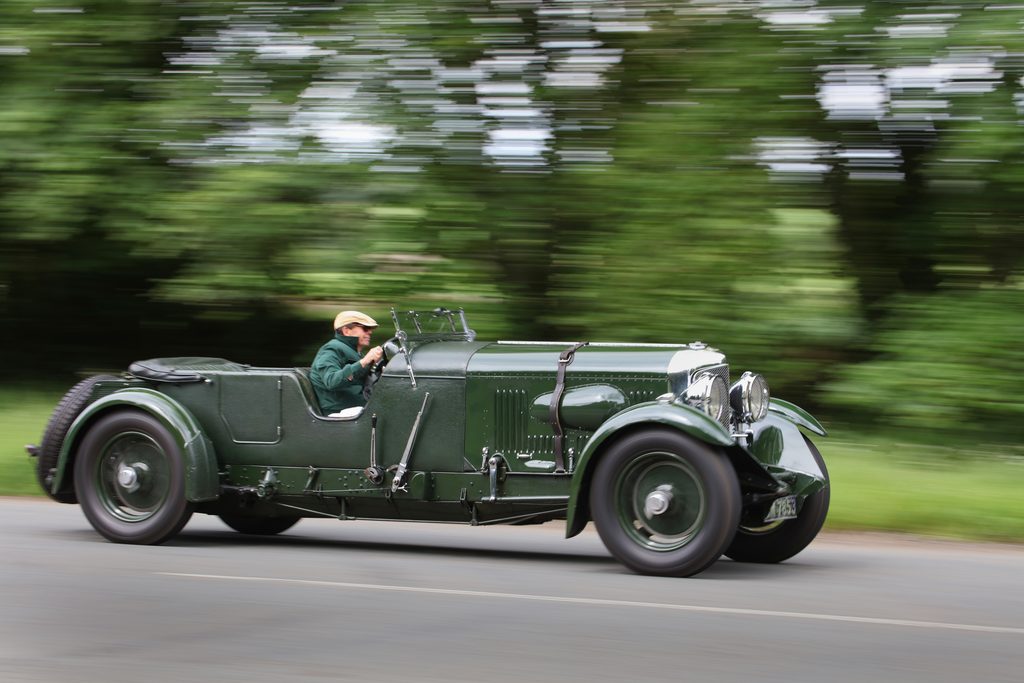
The great car was always driven across Europe, and Howard loved those long-distance journeys, recalling: “On fast curving, open roads in Switzerland, France and Italy, the 8-litre was in its element.”
English specialist Martin Chisholm, who looked after the Hewitt Bentley for Argentinian collector Daniel Sielecki, also drove it extensively on rallies. “The torque is stupendous and the handling is much more forgiving than an Alfa Romeo 8C. You can see everything from the elevated driven position. At the wheel it feels like the control deck of a battleship.”
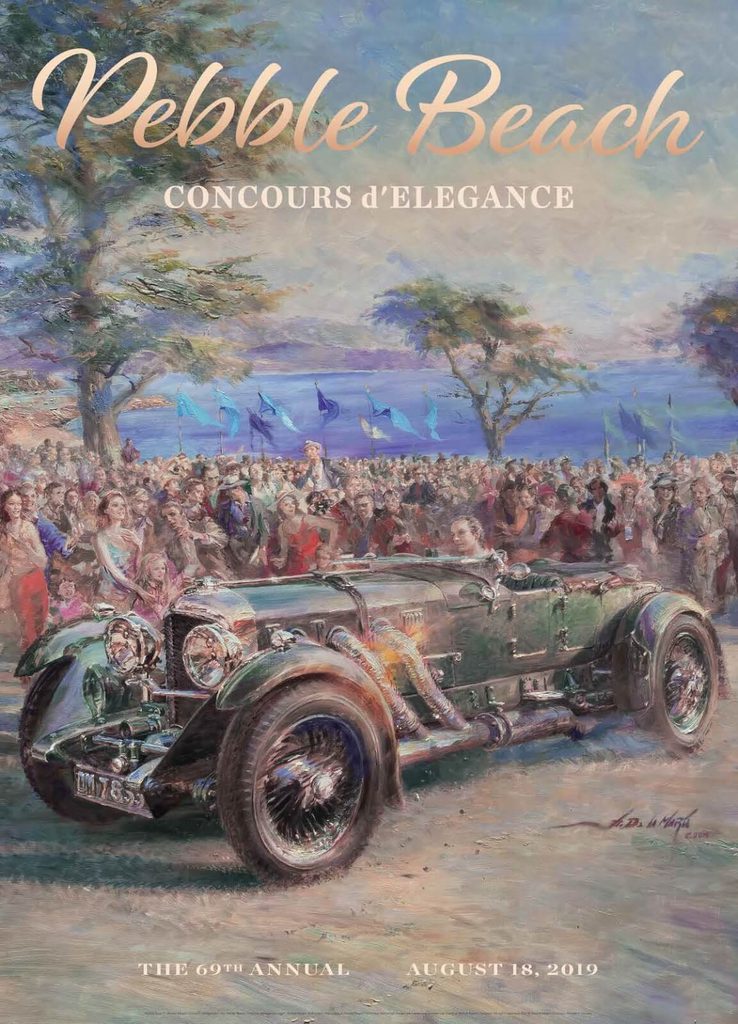
For the Bentley centenary, the Hewitt 8-Litre upstaged famous Le Mans winners as the poster car at the 2019 Pebble Beach Concours d’Elegance.
Now, this unrestored marvel, which is rightly rated one of the greatest all-time cars by connoisseurs, will be making its Newport debut at the Audrain Newport Concours on Sunday, October 4, 2026.
About The Author

More Stories
Car culture, not just preservation, is the future
The Life of Ray Evernham
Sporting Excellence with Understated Elegance