


The Man, The Myth, The Legend
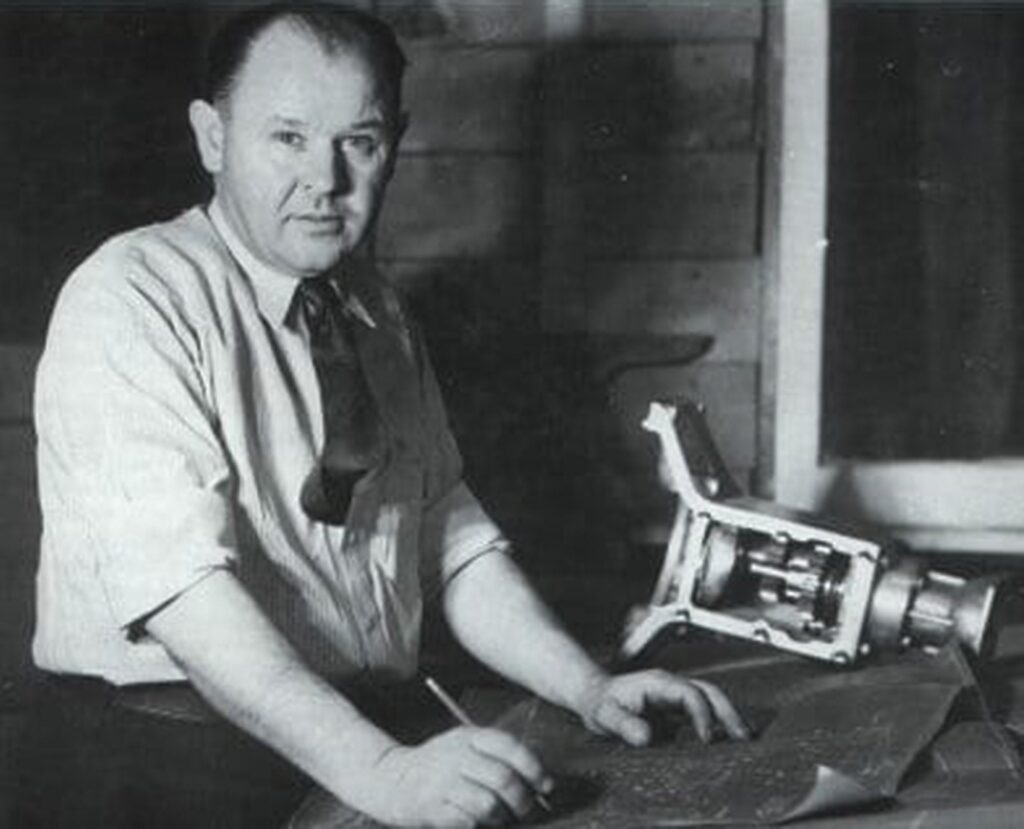
HARRY MILLER CLAIMED to be clairvoyant. “I don’t do these things,” he confessed. “I get help. Somebody tells me what to do!”

Even for those who understood him best — his long-suffering wife Edna, his loyal assistants Fred Offenhauser and Leo Goossen — Harold Arminius Miller was an infuriating enigma. Yes, he was brilliant, the most innovative racing engineer in American history, a visionary genius who could see farther than ordinary men and bring back what he saw there. But Miller was also a dreamy, self-destructive paranoiac who thoughtlessly squandered friends, fortunes and reputations without regret.
They fondly called him The Old Man, but Offenhauser and Goossen handled Harry Miller like a waywardly precocious child. They tried to channel his prodigious energies, to finish the endless engineering projects that he would begin and abandon with maddening frequency, while salvaging other concepts at least as brilliant, which languished for lack of interest, time or money.
Today, a century removed from the Golden Era of American Racing, it’s difficult to separate the Legend of Harry Miller from the reality. In 1896, as a 21-year-old self-taught mechanic from Menomonie, Wisconsin, Miller is said to have bolted a small stationary engine into a bicycle frame and invented the motorcycle. The next year, Miller attached a propeller to a small engine he hung on the transom of a rowboat and invented the outboard motor.
After Miller left Wisconsin, local Menomonie machinist Ole Evinrude opened a shop in Milwaukee where he supplied engines to partners William Harley & Arthur Davidson for their first motorcycles and went into business himself selling patented Evinrude outboard motors. Coincidence?
Miller heads to Los Angeles
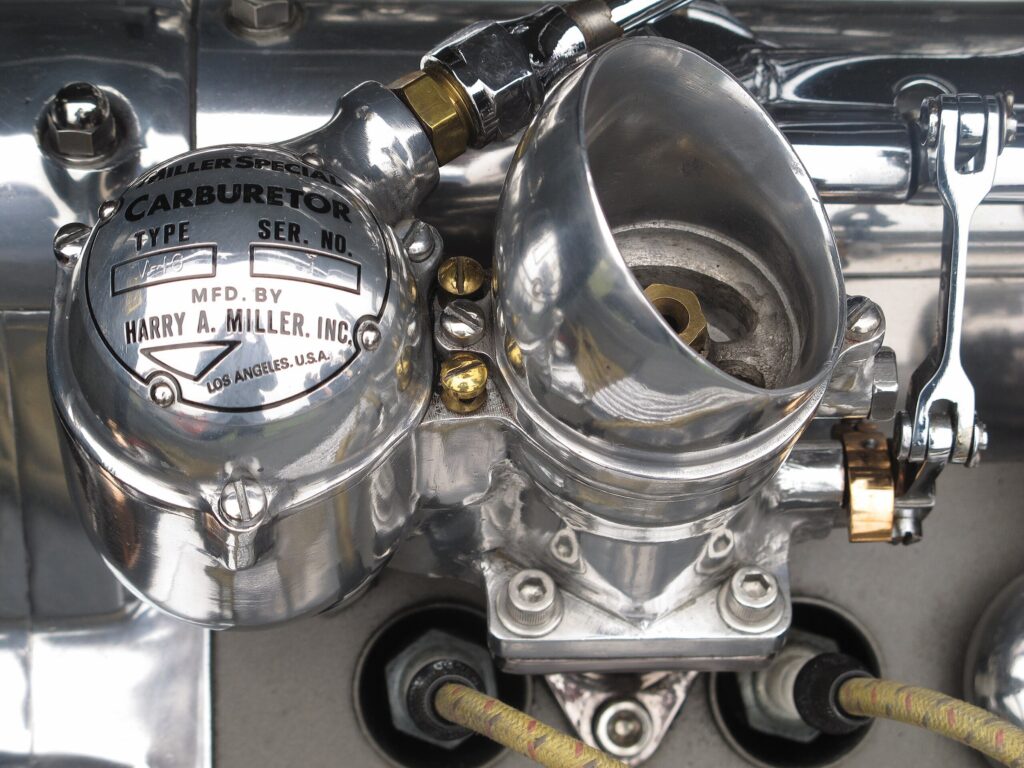
In 1906, after a stint in Michigan working as an Oldsmobile racing mechanic, Miller and Edna moved to Los Angeles, where Miller invented — and this time patented — a new design of sparkplug. Then he patented the Master carburetor, sold the Master patents and in 1912 patented the superior Miller “Jet Bar” carburetor that became a critical component of American high-performance engines for the next three decades.
In 1913, Miller hired machinist Fred Offenhauser to turn his futuristic visions into metal. He blended together aluminum, nickel and copper to create Alloyanum, which he used to make everything from tiny carburetor parts to strong but lightweight pistons, engine blocks and heads.
Miller then created his first complete racing engine for driver Bob Burman. It was a 7.3-liter, DOHC Inline 4 derived from the legendary Peugeot that won the Dieppe Grand Prix in 1912 and the Indianapolis 500 in 1913.
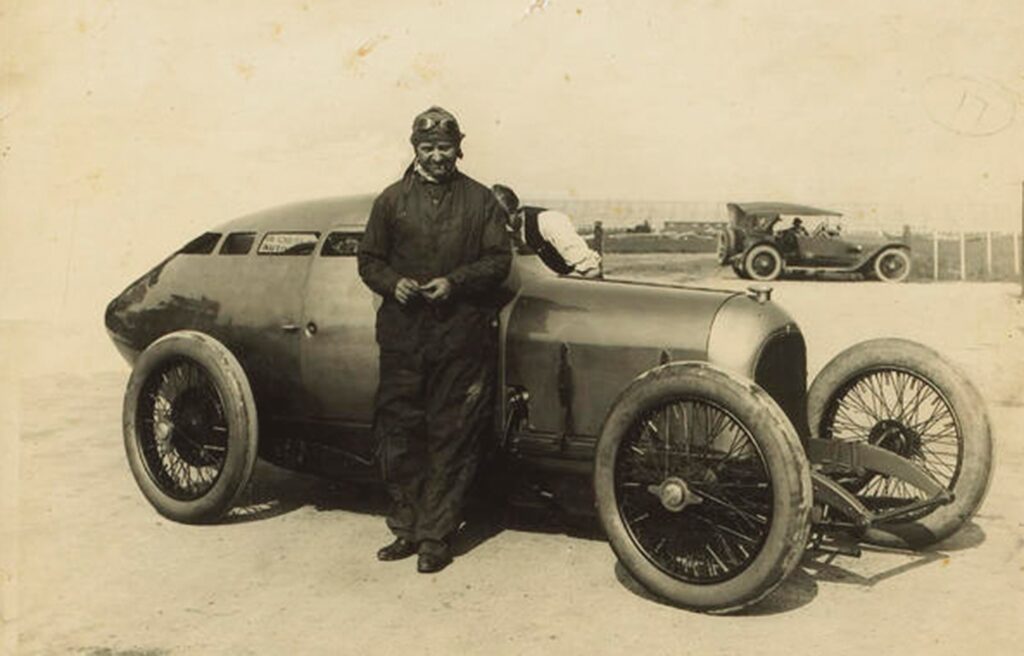
Two years later, Burman was killed when his race car rolled over and crashed. As a tribute to their mutual friend, Miller and Barney Oldfield collaborated on the first racing car with an integral rollcage hidden beneath a streamlined, aluminum coupe bodywork. It was a design at least six decades ahead of its time. To power the 1600 lb. racer, Miller created a 136 hp, 4.7-liter, SOHC Inline-4 with dual spark plugs, dual magnetos, his own carburetors and Alloyanum pistons.
Oldfield drove the streamliner — painted Bronze Metallic and aptly called “Golden Submarine” — in widely-promoted match races while barnstorming around the country. Golden Submarine soon entered the national lexicon as a synonym for “futuristic,” Miller’s racing parts business boomed, and every American traffic cop learned to snarl at speeders, “Who do you think you are, Barney Oldfield?”
During World War I, Fred and Augie Duesenberg were hired by the U.S. government to sort out a complicated U-16 Aero engine that Ettore Bugatti had cobbled together by gearing a pair of SOHC Inline 8s side-by-side. Having already produced a SOHC Inline-6 aero engine of his own design, Miller was hired to supply the carburetors. After the war, Bugatti, Duesenberg and Miller all created new racing Inline-8s, obviously influenced by their work on this stillborn U-16.
Top-rank American racing — the Indianapolis 500 followed by a summer season on lesser oval tracks — followed European Grand Prix regulations. As cars got progressively faster, engines were regulated smaller and smaller in a vain attempt to make racing safer.
Starting in 1913, engines were restricted to a maximum of 7.3-liters. The maximum was reduced to 4.9 liters in 1915, 3.0-liters in 1920, 2.0-liters in 1923, and to just 1.5-liters in 1926. Racers still went faster every year.
After the end of the Great War, Roscoe Sarles raced the tired old Golden Submarine to last place in the 1919 Indy 500, completing just 8 laps. More importantly, in August of 1919, draftsman/engineer Leo Goossen joined Harry A. Miller, Inc.
Aside from the 1919 Roscoe Sarles fiasco, the first Miller engine to appear at the Indianapolis 500 was in 1921. Ira Vail finished seventh with a 181 cubic inch Miller Inline-8 in his Duesenberg chassis. Miller had combined the best features of the DOHC, like the four-valvesper-cylinder Peugeot Inline-4, with the more efficient, more powerful Inline-8 configuration.
Cruising into the 1920s
For the 1922 Indianapolis 500, winner Jimmy Murphy replaced the engine in his Duesenberg chassis with a refined 183 cubic inch Miller I-8. Miller had sketched out his advanced ideas, Leo Goossen had drawn the immaculate engineering blueprints, Fred Offenhauser had overseen the complex machining. It was the first of many Indy 500 wins for “The Team.”
After a decade of trying, this was also the first Indy 500 win for a Duesenberg car, but embarrassingly, it had taken a Miller engine to do it. Duesenberg racers powered by Duesenberg engines did win the Indianapolis 500 in 1924, ’25 and ’27, it’s true. But Fred & Augie Duesenberg ran out of money in 1926 and lost their company to E. L. Cord, who made it part of Auburn-Cord-Duesenberg.
As Duesenberg faded, Harry A. Miller, Inc. concentrated on building the best possible racing cars, designed specifically for the unique conditions of American banked oval tracks, as opposed to European competition that was held almost exclusively on closed-off public roads or twisty, purpose-built courses.
In the Roaring Twenties, the average American workman had an annual salary of $1,500. Babe Ruth, the highest paid athlete in the world, earned a whopping $52,000 a year, which was more than President Calvin Coolidge. A Model T Ford cost only $319 in 1922 and just $260 in 1925.
At the same time, a handmade Miller race car cost $10,000. If you won the Indy 500, you not only became world famous, but you could earn more in Prize and Contingency money in a single glorious Memorial Day afternoon than Babe Ruth made all year.
In 1923, Indy adopted the 2.0-liter International Formula, which allowed single-seat open-wheelers without a riding mechanic. In Europe, this 2.0-liter Formula led to Vittorio Jano’s marvelous Alfa Romeo P2 and Ettore Bugatti’s legendary Type 35. The American equivalent was Harry Miller’s exquisite Miller 122.
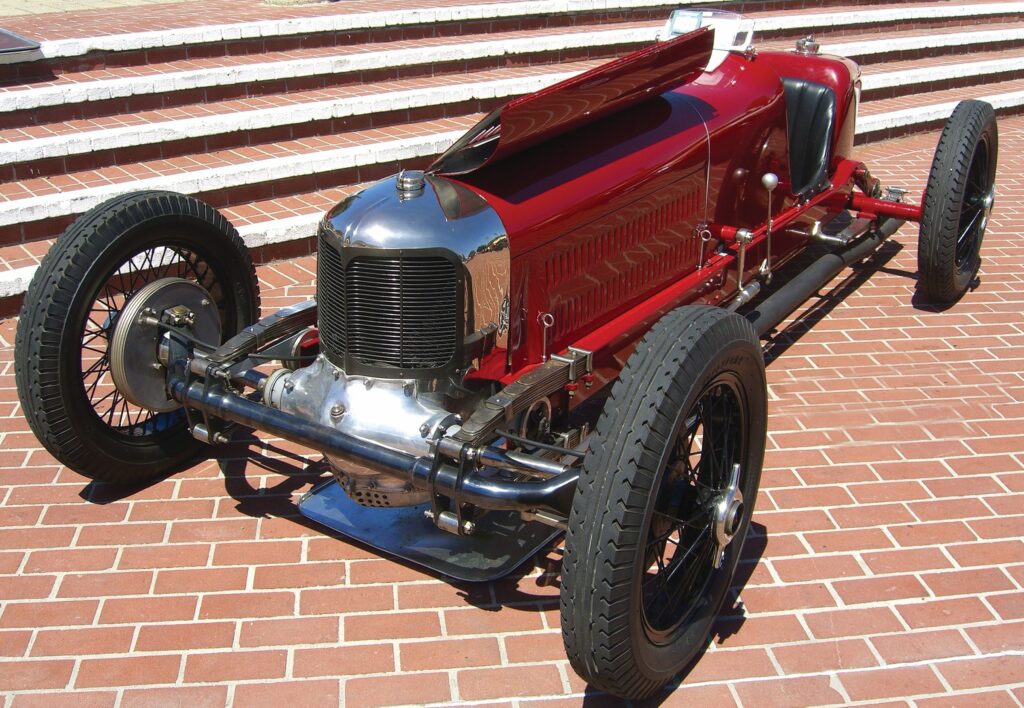
Essentially, the 122 engine was a twothirds scale Miller 183 cubic inch Inline-8, but with an increase to five main bearings and pent-roof combustion chambers. Driven by veteran racer Tommy Milton, the new Miller 122 not only won the 1923 Indy 500, but filled eleven of the twenty-one starting positions.
In 1924, Fred Duesenberg hired Dr. Sanford Moss to design centrifugal superchargers, and L.L. Corum’s supercharged Dusie won ahead of fourteen Millers in the Indy field. In 1925, Pete DePaolo’s supercharged Duesenberg beat sixteen Millers.
In 1926, the International Grand Prix Formula was reduced to little 1.5-liter supercharged engines in tiny 1322 lb. single-seat, Open-wheelers. In Europe, the most potent 1.5-liter GP car was a Delage that used twin superchargers to force-feed a DOHC Inline-8 to 165 hp at 6500 rpm.
Miller designs a masterpiece
It is to laugh. Miller’s masterpiece, the Miller 91, could be reliably boosted to 300 hp at 8500 rpm. That’s better than 3.3 hp per cubic inch, literally a century ago. Even by modern standards, the performance of a Miller 91 is truly remarkable.
More to the point, think what Miller had to work with. There were no computerized engine management systems, no fuelinjection. Aluminum and chrome-moly steel were still exotic materials. Gaskets and lubricants were so primitive that Miller designed his engines with a one-piece head and block, so there was no head gasket to leak.
All moving parts of a Miller engine were driven by gears, since chains and belts were unreliable. Gas welding was so poor that he used as few welds as possible in the chassis. Racing fuel — a volatile mixture of gasoline, benzol and alcohol — was so unstable that a compression ratio higher than 8:1 risked everything.
Harry A. Miller, Inc. was now the premier racing car builder in the world. Miller would sell you an engine — 330 lbs. of exquisitely-machined unobtanium — for $5,000, but most racers bought a complete car. A conventional front-engine/rear-wheel drive Miller 91, ready-to-race, cost $10,000. A lower, faster, front-wheel drive version was $15,000. Every Miller 91 was a hand-crafted masterpiece, a bargain beyond measure at any price. Just fifty Miller 91s were built, and only a dozen were front-wheel drive. But even if there had been only one, it would still be an infinitely desirable, timeless work of art.
A Miller 91 was also the highest performance car in the world, regardless of size or price. In speed, concept and craftsmanship, these tiny Millers were superior to anything that appeared for at least two decades.
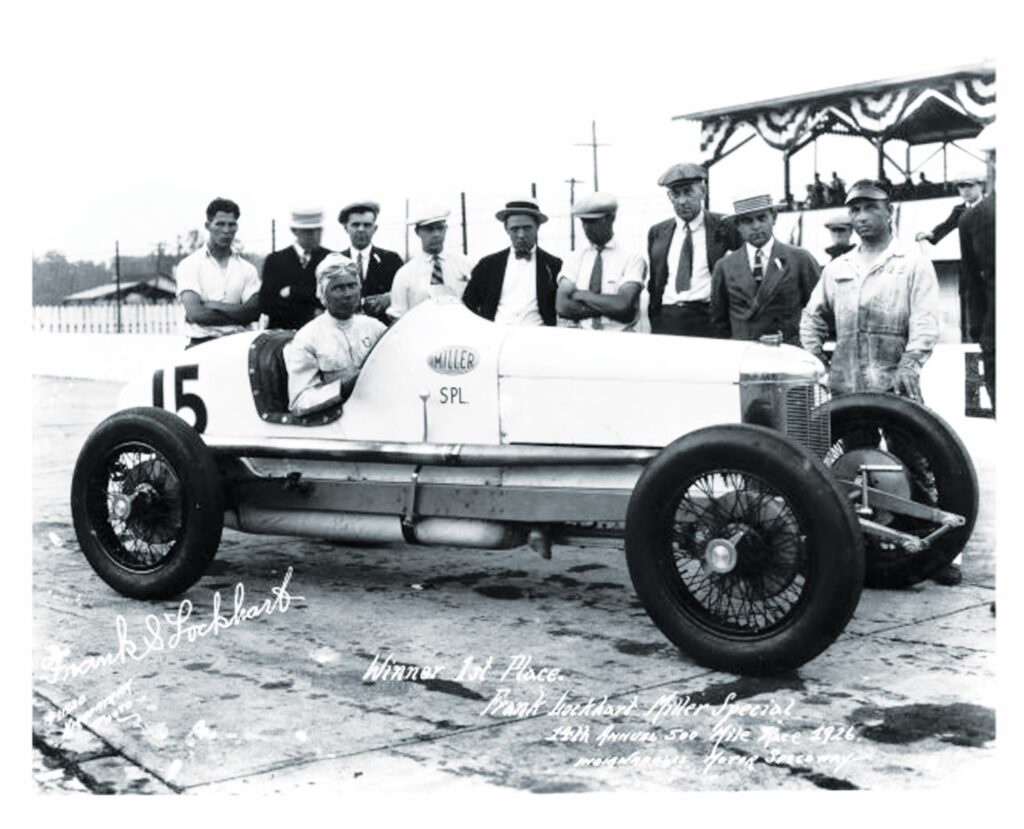
How fast was a Miller 91? Well, in 1926, young prodigy Frank Lockhart fitted an intercooler to the supercharger of his otherwise unaltered 1926 Indy-winning Miller 91 and was timed at 171.02 mph at Roberts Dry Lake in Mojave. At the time, the absolute Land Speed Record was only 174.883 mph, held by Malcolm Campbell’s monstrous aero-engine, 22.3-liter Bluebird.
Sponsored by Stutz, Lockhart promptly geared together two Miller 91 engines to create a 3.0-liter U-16 streamliner in which he was killed at 225 mph on Daytona Beach, April 25, 1928. Ray Keach drove the Miller 91 that had been prepared for Lockhart to drive at Indy in May of 1928 and won the 500 in 1929.
A series of wins
Indeed, Miller cars or engines won the Indy 500 in 1922, ’23, ’26, ’28, ’29, ’30, ’31, ’32, ’33 and ’34. From 1924 on, in most years Millers made up more than half the Indy field, peaking at 24 out of 33 in 1927. From 1926 through 1929, 75 percent of the cars that raced in the Indy 500 were Miller 91s.
In 1930, because of the Great Depression, Indianapolis Speedway owner Eddie Rickenbacker outlawed superchargers, which effectively switched American racing from the 1.5-liter International GP Formula to a Stock-Block formula based on production passenger car engines. Instantly derided as the “Junkyard Formula,” Rickenbacker expected this to attract both auto manufacturers and poor racers who could scrabble together a competitive race car from $1,500 in parts.
Rickenbacker overlooked the fact that when everybody complains they don’t have any money, some people still have more than others. Pricey Miller engines continued to dominate American racing. Some racers dusted-off old Miller 122 or 183 I-8s, some used a 181 cubic inch I-4 that Miller had designed in 1926 as a boat racing engine, Louie Meyer raced a V-16 made by sticking two Miller 91 I-8s on a common crankcase.
Miller himself revised his ten-year-old 183 I-8 and Harry Hartz won Indy with it in 1932. Despite being “outlawed and obsolete,” Miller engines powered 18 Indy starters in 1930, 16 in 1931, 18 in 1932, 19 in 1933, 18 in 1934, 22 in 1935 and 18 in 1936. There were fewer each year; 1948 was the first Indy 500 since 1920 without a Miller engine in the field.
Remember, Harry Miller always claimed to be clairvoyant. He seems to have known the “Junk Formula” was coming. Back in 1929, at the pinnacle of his success, weeks before Black Thursday, Miller was suddenly inspired to sell his company to George Schofield and move back to Detroit to work with his former employee Cornelius Van Ranst on the front-wheel drive Cord L-29, a design based on Miller’s patented front-wheel drive system.
A new venture
Within a year, the Cord L-29 was in production and Schofield was already in bankruptcy. Miller returned to Los Angeles and formed a new company called Rellimah — hamiller backwards — with Offenhauser and Goossen. Rellimah itself went bankrupt in 1933, but only after a wildly productive three years during which The Team created not only more Indy winners, but an assortment of engines and vehicles for a variety of clients.
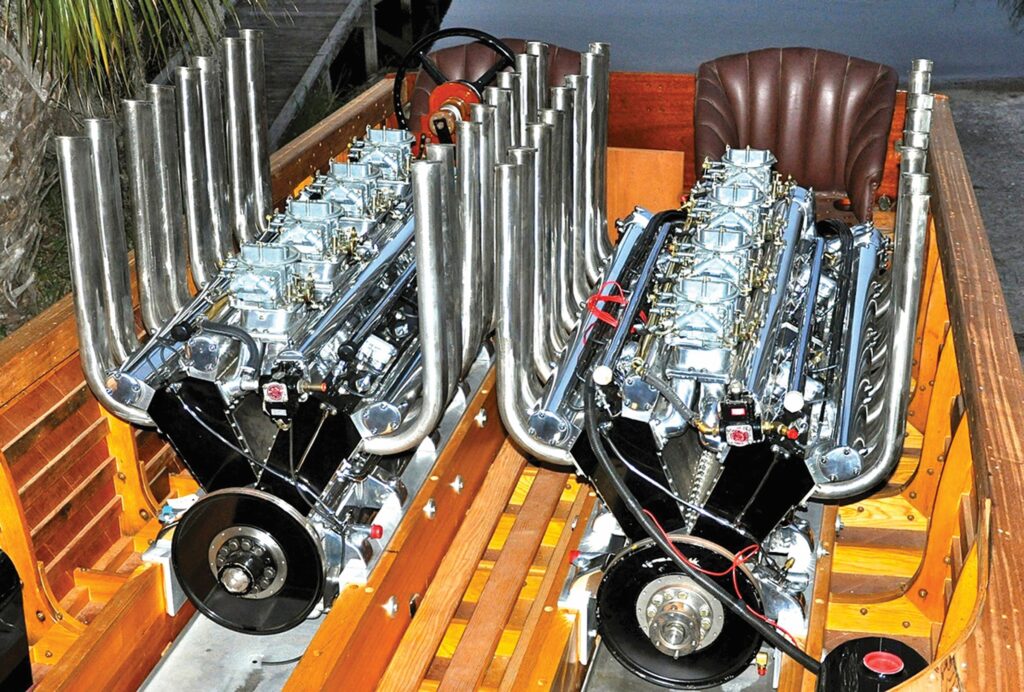
The most impressive was a supercharged 1113 cubic inch V-16 for legendary boat racer Gar Wood. Miller assembled two of these 1800 hp monsters, each of which weighed 300 lbs. more than a complete Miller 91 car. Wood had them installed in Miss America VIII and got up to 104 mph in 1931, which was still 6 mph less than the 1931 World Water Speed Record set by Miss England II powered by a pair of Rolls Royce V-12 Aero engines.
At the same time, Miller was working on a $30,000 passenger car for Philip Chancellor. This Kirchhoff bodied two-seater was front-wheel drive and powered by a DOHC V-8 made by bolting a pair of 151 cubic inch Miller I-4 boat racing motors onto a common crankcase.
In 1932, Miller built a pair of innovative but unsuccessful four-wheel drive race cars, each powered by a 308 cubic inch V-8. William Burden sponsored one, which Gus Schrader crashed after only seven laps at Indy. Undeterred, Burden gave Miller a $35,000 check for a passenger car even more exotic than Chancellor’s. Miller put two 151 cubic inch I-8s together to form a DOHC V-16, driving through his new patented four-wheel drive system. Burden’s car was bodied as a Speedster by race car fabricator Emil Diedt and finished by crew chief Eddie Offutt after Rellimah went out of business in 1933.
There was acrimony on all sides. Miller blamed Offenhauser and Goossen for the financial failure of Rellimah, and they blamed Miller for the abandonment of lucrative projects in favor of money-losing schemes. In the end, The Team was simply tired of fronting for Miller’s increasingly erratic behavior.
The legendary Offenhauser I-4
Fred Offenhauser bought what was worth saving from the ruins of both Harry A. Miller, Inc. and Rellimah. He and Goossen opened a new shop a block away called Offenhauser Engineering. The legendary Offenhauser I-4, which started out as a 225 cubic inch Miller boat racing engine in 1926 and was re engineered by Miller in 1931, was finally put into production by Offenhauser.
An Offy has all the recognizable Miller trademarks; DOHC, one-piece block and head, aluminum barrel crankcase, pentroof combustion chambers and tubular connecting rods. Offenhauser produced this engine in 159, 168, 220, 225, 252, 255 and 270 cubic inch versions.
Goossen also cut in half the old Miller 183 Inline-8 to create the all-conquering 97 cubic inch Offenhauser DOHC I-4. These little jewels were unbeatable in Midget racing all the way into the Sixties, when the rules were eventually changed to give somebody else a chance.
Thanks to his concentration on a couple of basic designs with constant minor improvements, Offenhauser was able to sell a ready-to-win engine for a bargain $2,000 and still make a profit. The new Offy won its first Indy in 1935, and appeared every Memorial Day until 1980, winning the Indy 500 a record 27 times and dominating American racing even more than Miller had dominated the Twenties and Thirties.
A partnership with Ford
By 1934, Miller was a broke, paranoid, diabetic, 60-year-old who’d somehow made and lost millions of dollars, despite decades of building and selling the most innovative, successful and pricey racing cars and parts in the world.
At the same time, Preston Tucker was a broke, out-going, healthy 32-year-old former car salesman whose only assets were unmitigated gall and a line of patter that could charm the birds down from the trees. Tucker somehow made friends with Miller then, even more astonishingly, talked himself into a deal with Henry Ford’s son Edsel, President of Ford Motor Company.
If FoMoCo would finance the construction of ten “Junk Formula” race cars for the Indy 500, Miller would design and build them around stock-block V-8 engines and running gear supplied by Ford. Of course they would win, garnering priceless publicity for the new Ford V-8 passenger cars.
Henry Ford thought the whole idea was preposterous, but Tucker convinced Edsel to spring for $25,000 to be paid through Ford’s advertising agency. By the time the deal was finalized, Miller had just 79 days to build 10 cars for $2,500 each.
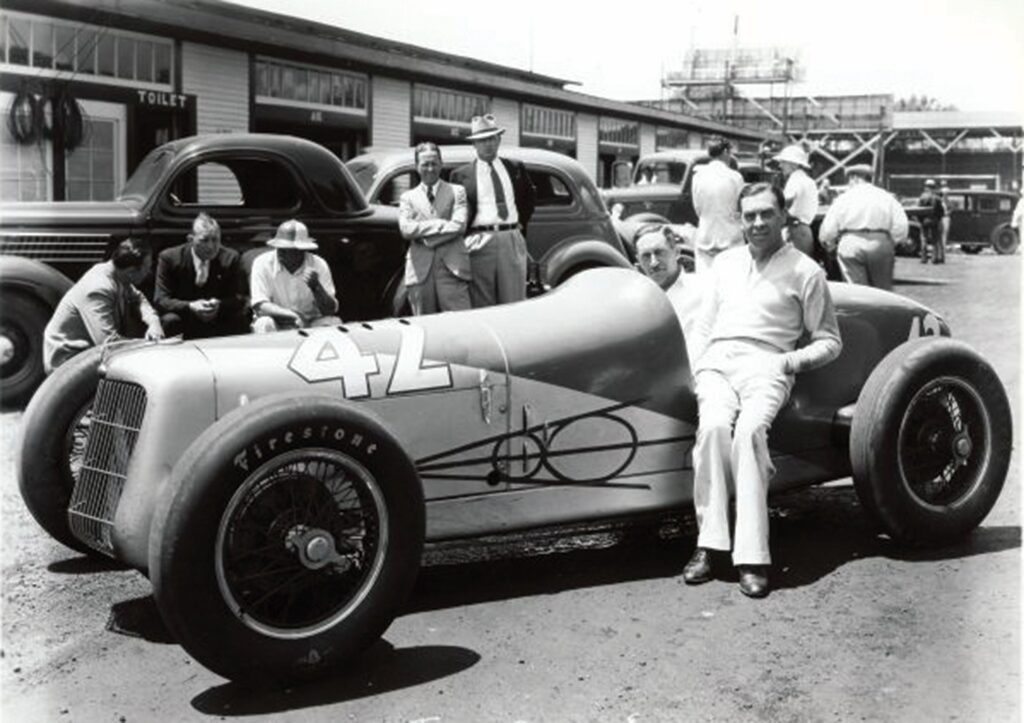
Let’s review. For three decades, Miller had always built every part of every car in his own shop, charged at least $10,000 each and as it turned out, seems to have lost money on each and every one. Working under impossible conditions, without the essential help of Offenhauser and Goossen, Miller still managed to build ten of the most beautiful cars in history, the quintessential racers of the Stock-Block Era. They were at least two decades ahead of the competition, filled with fresh new ideas still valid today.
A Miller/Ford had deep 6-inch frame rails connected by tubular cross-members, a patented Miller front-wheel drive 2-speed transaxle and twin-transverse quarterelliptic leaf springs front and rear that made this the first Indy racer with allindependent suspension. The hot-rodded, 150 hp, 221 cubic inch Ford Flathead V-8 sat backwards, driving the front wheels.
The driver and riding mechanic sat on the flat floor, as low as possible. Everything was covered by the sleekest possible aluminum bodywork sketched by Harry’s artistic new draftsman, Everett Stevenson, fronted by a cut-down 1935 Ford grille and incorporating aerodynamic fairings over the axles.
Miller was used to doing the impossible, but building ten cars in eleven weeks was too much, even for him. Most of the Miller/Fords were completed, but only four qualified for the Indy 500. Ted Horn was the fastest qualifier, and he started 26 out of 33. All four Miller/Fords dropped out during the race, because a needle-bearing universal joint in the steering shaft overheated and seized, locking the steering.
After this debacle, Tucker presented Ford with a bill for $75,000, not $25,000.Henry Ford was so furious he hid all ten Miller/Fords in a warehouse for two years. Eventually, Ford suppliers Lou Fageol and Lewis Welch were allowed to buy nine of the ten. They appeared sporadically at Indy until 1948, usually powered by an Offy, never finishing higher than mid-pack.
A project for Gulf Oil
After two desperate years of barely scraping by, in 1937 Miller’s long-time client Ira Vail saved him by ordering two new cars for Indy. Miller had Everett Stevenson lay out a DOHC I-4 of 270 cubic inches, with wet cylinder liners and a split crankcase that made assembling the engine much easier than most Miller designs, including the Offy.

This unique Miller engine sat in a front-engine/rear-drive frame with independent suspension derived from that of the Miller-Fords, 4-speed rear transaxle, clever four-wheel disc brakes designed like a clutch disc and pressure plate, teardrop side fuel tanks and streamlined chromed copper radiator tubing that wrapped around the whole front half of the car.
In the middle of this project, Ira Vail sold the whole thing to Gulf Oil, which had decided they just had to win the Indy 500 with a car running on 81 octane Gulf gasoline rather than the exotic brews that racers used. Gulf moved everything including Harry and Edna to Gulf R&D in Harmarville, Penn., near Pittsburgh.
Miller quickly finished up the two reardrive cars he’d begun for Ira Vail, but both were put aside while he started this whole new project for Gulf. Never really sortedout, both Vail cars failed to qualify at Indy in 1938. The basic problem was overheating because the strikingly clever aerodynamic radiator simply didn’t work.
Starting right after the 1937 Indy race, Miller now enjoyed the full facilities of Gulf R&D, an unlimited budget, and eleven months to build four cars for the 1938 Indy 500. He hired meticulous coachbuilder J. Gerald Kirchhoff and long-time Indy crew chief Eddie Offutt, who worshipped Miller and was the last one who would ever tell him “No!”
If Offenhauser and Goossen had been there, they would have tried to persuade Harry to build the new Gulf cars based on existing Miller designs that were still winning Indy with clocklike regularity. With the irreducible clarity of the confirmed paranoiac, Harry determined to create an absolute technological tour de force — all-new from the ground up — the crowning achievement of his already legendary career.
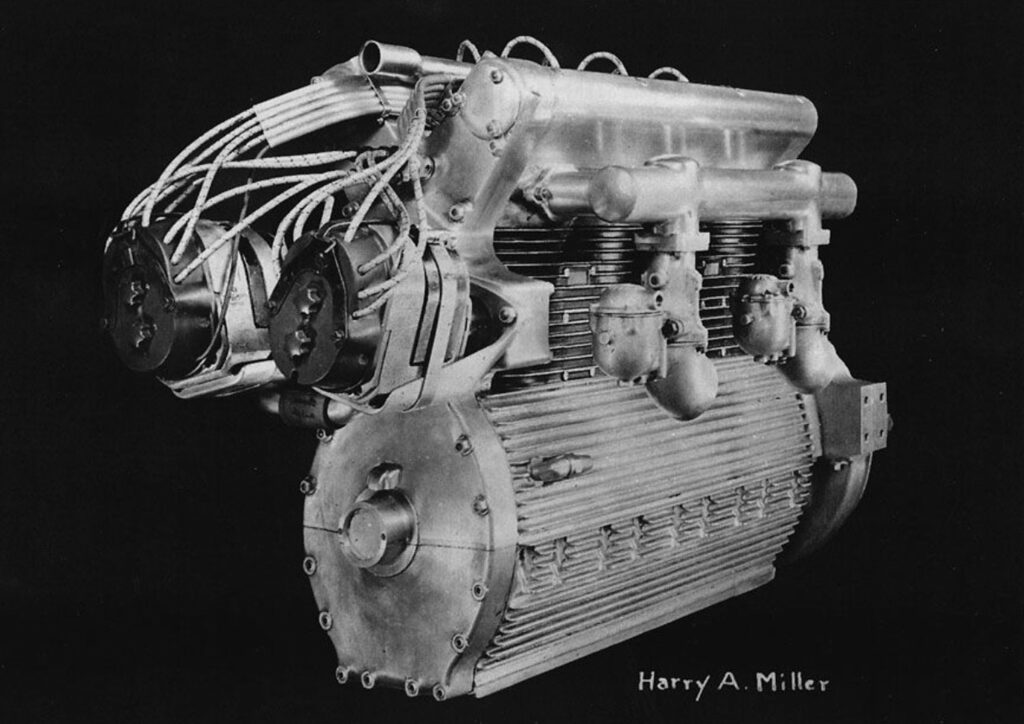
Starting in 1938, Indy now allowed supercharged, 3.0-liter engines. Miller created a short-stroke, DOHC Inline-6 designed from scratch to be both offset in the chassis and canted to one side, the first time anyone had done that. The supercharger spun at 32,000 rpm and had vanes on both sides of a single rotor, feeding a carburetor from each side.
Miller was determined to use his patented four-wheel drive system in a rear mid-engine chassis similar to that of the Porsche-designed Auto Unions that were winning races in Europe. To do this, he used two long driveshafts, one from the rearmounted engine to the front transaxle, one from the front axle to the rear axle. Why he didn’t use a rear transaxle similar to those in the Ira Vail cars, then a single driveshaft from rear to front, we’ll never know. Unlike the tail-heavy Auto Unions, however, Miller did achieve 50/50 weight distribution.
The Gulf-Miller takes shape
There were many other innovations. Four-wheel disc brakes. All-independent suspension with aerodynamic fairings over the axles. Aerodynamically-shaped outboard fuel tanks that maintained perfect weight distribution as the tanks emptied. Inboard-mounted shock absorbers operated by remote levers. Fabricated frame rails that formed part of the bodywork… the first monocoque body/chassis at Indianapolis. These are all design features that we take for granted on any modern racing car, because Miller thought of them ninety years ago!
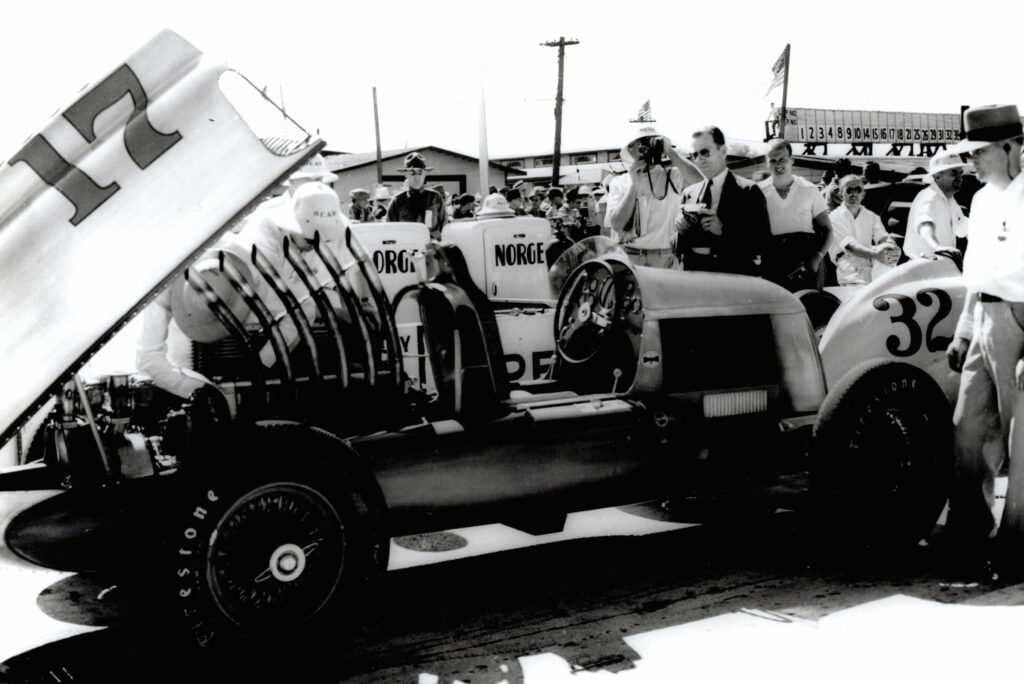
Without Offenhauser and Goossen to keep him in check, Miller spent 7,000 hours crafting each Gulf-Miller. Every piece had to be specially made, every car was immaculately finished inside and out. Not only did Miller exceed his unlimited budget, but none of the cars were finished in time, nor did they work very well.
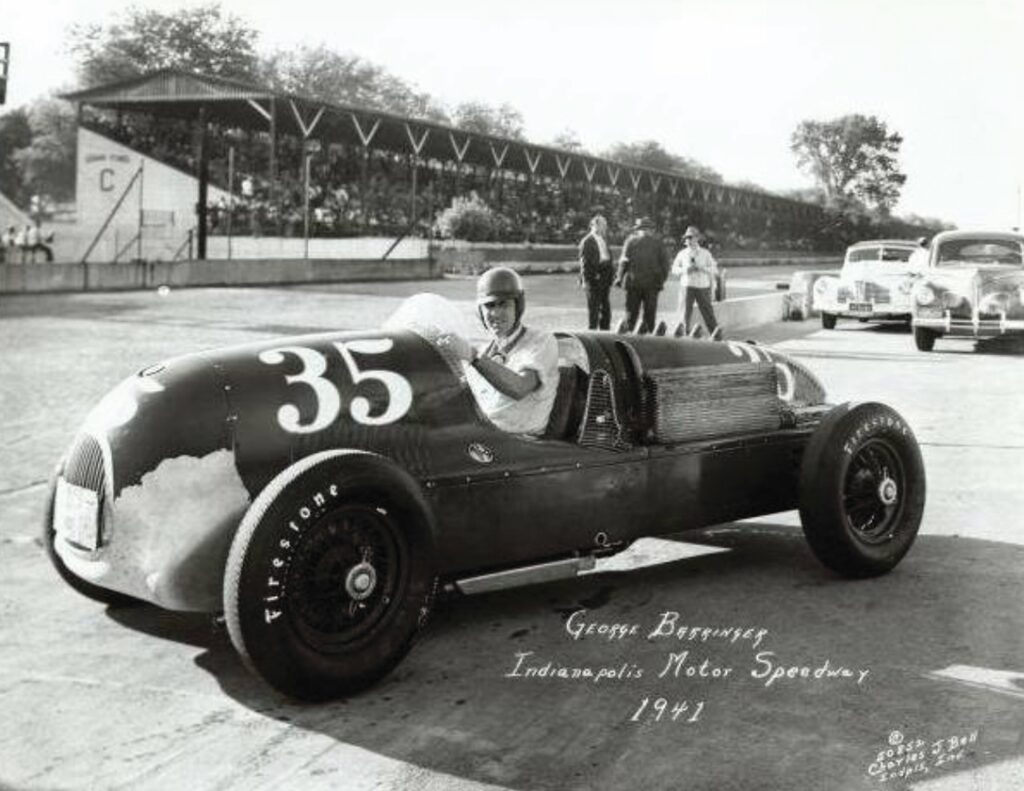
One Gulf-Miller was shown at Indy in 1938, but did not arrive in time to qualify. Miller and his crew worked all year and managed to have three cars ready for 1939. Johnny Seymour crashed, and his car burned. In 1940, George Bailey crashed, and his car burned, too. AAA “suggested” that Gulf withdraw the remaining car for George Barringer before the same thing happened to him.
Instead of Indy, Barringer took it to Bonneville and set a 3.0-liter speed record at 158 mph. Nice as this seems, it was also 15 mph slower than Frank Lockhart had gone 15 years earlier in a Miller 91 with an engine half the size.
Barringer’s Gulf-Miller was substantially altered, including a more aerodynamic nose, before it burned at Indy in 1941 before the race. The remaining car ended up in Preston Tucker’s hands, who convinced Al Miller to drive it at Indy in 1947. He started 19 and stopped after 33 laps.
The end of an era
By then, Harry Miller had been dead for four years. He and Edna had retired to Detroit after the Gulf-Miller cars were completed in 1939. Disfigured by cancer of the face caused by a scratch from a rose thorn, Miller died on May 3, 1943, leaving Edna nearly destitute. Preston Tucker paid for the funeral.
Miller had spent his last few years designing a transverse-engine, front-wheel drive economy car very similar to the Volkswagen Rabbit of the Seventies. Like so many of his projects, it was a good four decades ahead of its time. Maybe Harry Miller really could see into the future and bring back what he saw there.
About The Author

More Stories
Car culture, not just preservation, is the future
The Life of Ray Evernham
The Bentley 8 Litre